Home Blog Page 33

Lisa Marie And Her Son

0
Lisa Marie And Her Son

Sofia Coppola’s Priscilla, which hit theaters on October 27, re-imagines the intricacies and hidden history of Elvis’ relationship with his wife, Priscilla. The film, which is now out in theaters, details a lesser known side of the Rock N’ Roll legend—and the only woman he ever married.

In 1954, Elvis met his wife, the titular Priscilla, in Germany. At the time, Elvis was 24, and stationed in the European country with the military. His future wife was just 14 at the time, and was just starting her freshman year of high school. Despite the 10 year age gap, Elvis pursued Priscilla romantically—which resulted in a whirlwind relationship that inspired the new A24 film.

During their decade together, Priscilla gave birth to the couple’s only child, Lisa Marie Presley. However, the actress later had another child with a different partner, after Elvis’ death. Below, see everything to know about Priscilla Presley’s two children.


Lisa Marie Presley, 54.

14th annual americana music festival  conference festival day 3

Priscilla and her daughter Lisa Marie at the Americana Music Festival and Conference in 2013.

Rick Diamond//Getty Images

Lisa Marie Presley was born on February 1, 1968, exactly nine months after the couple officially got married. She lived at Elvis’ iconic Graceland estate for most of her early childhood, according to The Guardian. Lisa was primarily raised by Priscilla, who later moved the pair to Los Angeles (but would frequent Graceland to see Elvis after the couple’s divorce).

Lisa Marie had four children of her own: Riley Keough and the late Benjamin Keough, and twins Harper and Finley Lockwood. She shared Riley and Benjamin with Danny Keough and Harper and Finley with Michael Lockwood.

In January 2023, Elvis’ daughter unexpectedly died from a small bowel obstruction—a longterm complication from bariatric surgery, according to the New York Times. She died at her home in Calabasas, California.

Navarone Garibaldi Garcia, 36

dream foundation celebration of dreams arrivals

Navarone is Lisa Marie Presley’s half brother.

David Livingston//Getty Images

About 10 years after Elvis Presley’s death, Priscilla welcomed her second child, Navarone Garibaldi Garcia, with her longtime partner Marco Garibaldi on March 1, 1987. Priscilla never married Marco, but the couple was together for nearly two decades.

Priscilla met Marco through mutual friends in 1983, and were engaged at one point in their relationship, per the Chicago Tribune. Navarone seems close to his mother, but he is estranged from his music producer father, he previously told PEOPLE.

Navarone has remained mostly out of the spotlight throughout his life—and claims he was not raised in a lavish world, per PEOPLE. Priscilla’s son actually formed a band in 2005 called Them Guns, which is still releasing music to this day (although is not super well-known). In a 2022 interview, the musician told the outlet, “People know ‘about’ me, but they don’t ‘know’ me.”

In the early aughts, Priscilla’s son tried to distance himself from his family, per PEOPLE, but now it seems he’s grown closer to his mother. She attended his wedding in Switzerland in 2022, and posted about it on her Instagram. Her son also attended the premiere of Priscilla in October 2023.

After his half-sister Lisa Marie’s death earlier this year, Navarone told PEOPLE he wanted to step up and be there for his mother. He attended Lisa Marie’s memorial at Graceland on January 22, 2023, according to PEOPLE.

Were Navarone and Lisa Marie Presley close?

It doesn’t seem like Priscilla’s children were very close growing up, according to PEOPLE. The siblings were 18 years apart in age, after all. However, upon the news of Lisa Marie’s death, Navarone posted a tribute to his half-sister on his Instagram page.

“I hope you are now at peace and happy with your Dad and your son by your side,” he wrote in the post’s caption. “I know the past couple years weren’t easy for you, and I wish things had been different between us.”

This content is imported from poll. You may be able to find the same content in another format, or you may be able to find more information, at their web site.

Navarone also says that of Lisa Marie’s kids, he’s closest to his niece, Riley Keough. “Riley has been so good with the twins,” he told PEOPLE of the Daisy Jones and The Six star’s relationship with her own half sisters, Harper and Finley.

You can learn more about the real Priscilla in the eponymous A24 film, which hit theaters on October 27, 2023.

Headshot of Olivia Evans

News Editorial Assistant

Olivia Evans (she/her) is an editorial assistant at Women’s Health. Her work has previously appeared in The Cut and Teen Vogue. She loves covering topics where culture and wellness intersect. In her free time, she enjoys cooking, running, and watching rom-coms. 

California kids have major dental decay. Don’t just blame Halloween

0
California kids have major dental decay. Don’t just blame Halloween

Priscilla Serrano did everything she could to keep her child’s teeth clean and healthy. She rubbed his gums twice a day with a finger brush when he was 3 months old. She brought him to the dentist before his first birthday. She weaned him off a bottle early, gave him healthful snacks, avoided juice, brushed his teeth twice a day, and even flossed for him.

But despite her best efforts, Daniel still developed two cavities before his 6th birthday.

“I was kind of devastated. You work so hard to prevent any of this, and then you see your child in pain,” said Serrano of Long Beach. “I was in denial at first. I was like, ‘No, I did a good job.’ But I finally accepted.”

At the time of year described by dentists as the scary season for teeth — a Halloween holiday laden with sticky, sugary treats — children’s dental care takes on a sense of renewed urgency. The stakes couldn’t be higher in California, where the health of little teeth is sobering.

Dental hygienist Elizabeth Valdivia, right, holds a stuffed animal so that Armani Allen, 2, can learn good teeth brushing habits as he his held by his mother, Nicole Nelson, at the Children’s Dental Health Clinic in Long Beach.

(Allen J. Schaben / Los Angeles Times)

California ranks among the worst states when it comes to pediatric dental disease. A national survey from 2020-21 found that 14.8% of the state’s children ages 1 to 17 had decayed teeth or cavities in the past 12 months studied — ranking 47th out of 51 among all the states and the District of Columbia.

“We’re really pushing for prevention because we don’t want to go down the line of having cavities, oral pain, possible infection and spread of infection,” said Dr. Abrey Daniel, a dentist with the Oral Health Program at the Los Angeles County Department of Public Health. “Sometimes parents may just do a quick brush and not even notice that cavities are forming.”

Nationwide, more than half of children develop cavities by the age of 8, usually because of poor nutrition, bad hygiene habits or a lack of dental care. Other factors include drinking water without fluoride, inadequate saliva flow and genetics; even a child with good dental habits can develop cavities.

As with so many health issues, children from socioeconomically disadvantaged families are most at risk. The California Department of Public Health’s 2018-19 Smile Survey of third-graders found that children from communities of color and Spanish-speaking households are more likely to experience tooth decay. Latino children had the highest rates, with 72% having experienced some sort of tooth decay, compared with 40% of white children. Black children had the highest rate of untreated decay at 26% — almost twice the rate of white children.

Throughout the state, many low-income children have limited access to dental care, fresh fruits and vegetables, and fluoridated tap water, said Dr. Ryan Huang, the dental director at the South Central Family Health Center. Less than 60% of the population across California receives fluoridated water, according to the CDC.

Brushing twice a day with fluoride toothpaste is also crucial, yet many California children aren’t meeting that threshold, said Huang. Some families can’t even afford to buy toothpaste or toothbrushes, and others don’t know the basics of dental hygiene. “There’s a lack of proper education not just with the children, but with the parents too,” Huang said.

The state in recent years has worked to improve its dental insurance program for the poor — which was harshly criticized in 2016 by the Little Hoover Commission for failing to provide adequate care to half of the state’s children. Few dentists in the state accepted the insurance, the commission reported, due to low reimbursement rates and bureaucratic red tape, leaving many low-income California kids without access to dental care.

Only about half of eligible children saw a dentist annually because so few dentists would see them, compared with two-thirds of children with commercial insurance, the commission found. Since then, the state has increased payment rates for dentists in an effort to improve access for patients.

A 2022 state survey of Medi-Cal dental providers found that 54% said the average wait time for a non-urgent appointment was less than one week; 40% said the wait was one to three weeks. The 2018-19 Smile Survey found that rates of decay had declined over the previous decade, but were still well above national data. In California, 61% of third-graders had experienced tooth decay, compared with the national median of 53% among states.

Dentists say the rates of decay likely worsened during the pandemic, when many children skipped dental appointments.

Accessing Medi-Cal dental care remains difficult in some parts of the state, including rural areas and even some ZIP Codes in L.A., where there is still a shortage of dentists that accept the coverage.

This is the mouth of a 3-year-old child showing severe dental disease

This is the mouth of a 3-year-old child showing severe dental disease, which can be caused by a diet high in sugar, juice and sticky foods, along with poor dental hygiene.

(The UCLA Center for Children’s Oral Health)

L.A. County’s Smile Survey, which was conducted by the public health department, found that on any given day, more than 4,500 Los Angeles County kindergarten and third-grade children need urgent dental care, which means they may be experiencing mouth pain or a serious infection. Elementary students at L.A. Unified missed an average of 2.1 days of school because of dental issues, according to a 2011 study from the University of Southern California.

State law requires parents of kindergartners to submit proof of an oral health assessment, but the mandate is not enforced. Parents are allowed to fill out a waiver explaining that they did not complete the assessment for various reasons, including being unable to find a dental provider, said Eileen Espejo, who leads the oral health project at Children Now.

There are efforts to screen and treat students who don’t have access to care through dental clinics at schools, including at LA Unified, with help from local nonprofits and county health departments. But the available resources do not come close to meeting the needs of students.

The importance of healthy baby teeth

Dentists say that waiting until a child is of school age is much too late to begin regular dental checkups.

“A lot of parents have the misconception that baby teeth will fall out and aren’t important, but it’s the best predictor of oral health for adults,” Daniel said.

Baby teeth are crucial to speech development, proper nutrition and jaw formation. Problems can cause long-term complications for a child’s overall health and well-being. Cavities in baby teeth can spread to the permanent teeth waiting to push through. And severe untreated decay can lead to broken teeth, abscesses and, in extreme cases, even death.

A hygienist cleans a child's teeth.

Dental Hygienist Elizabeth Valdivia cleans the teeth of Armani Allen, 2, as his mother holds him at Children’s Dental Health Clinic in Long Beach.

(Allen J. Schaben / Los Angeles Times)

And because baby teeth have a thinner outer shell of enamel, which allows bacteria to eat through them faster, they are even more susceptible to cavities than the permanent teeth that replace them. Before the pandemic, 5% to 7% of Kindergartners screened at L.A. Unified schools had severe dental disease requiring emergency treatment, according to the L.A. Trust for Children’s Health, which brings dental care to LAUSD schools. After the pandemic, that number had grown to 7% to 10%.

Cavities can form even earlier. In extreme cases, baby teeth erupt in infants with cavities already formed. At UCLA, there’s a six-month wait for surgery for treatment of severe cases of tooth decay requiring anesthesia, said Dr. Francisco Ramos-Gomez, director of the UCLA Center for Children’s Oral Health.

Vigilant care for baby teeth and those first permanent teeth falls squarely on parents and caregivers, and their early practices will have long-lasting ramifications for a child’s future dental health.

A surprisingly long list of dos and don’ts

The recommendations for baby teeth hygiene go far beyond just brushing twice a day and avoiding lollipops. Some of recommendations are well known: Brush twice a day. Avoid sticky candy that’s difficult to remove from teeth, as well as sugary juice and soda. Don’t let your child fall asleep with a bottle of milk. Visit a dentist by the time a child is 1 year old, and make sure a child receives a fluoride treatment.

Other recommendations are also important, but lesser-known and cumbersome.

From the time a baby is born, for example, dentists advise that caregivers begin wiping their gums with a clean cloth after feedings. Some dentists advise wiping even after middle-of-the-night feedings, while others say twice a day is plenty.

“If the baby is sleeping, the last thing I’m going to do is jam a finger in their mouth,” said Dr. Lisa Berens, a professor at the UC San Francisco School of Dentistry. “It’s more to get them habituated to the feeling of something in their mouth.”

Brushing should be done early and often. When the first tooth appears, dentists say, begin brushing with a small smear of fluoride toothpaste on a baby toothbrush twice a day — just enough to color the bristles — and avoid so-called training toothpastes that do not have fluoride.

“Training toothpaste is garbage because it gives a false sense of security to parents,” Ramos-Gomez said. “It doesn’t work.”

Meanwhile, caregivers should begin flossing when the child has two adjacent teeth that are touching, or by the age of 5, and continue brushing their child’s teeth for them until age 8. “Even if the child doesn’t want to, you have to,” Ramos-Gomez said.

Nutrition is also key. Children should minimize snacking to three times a day or less and seek to avoid not only candy but all sticky foods, including dried fruits such as raisins and gummy vitamins, which tend to adhere to teeth and are difficult to wash away. Ramos-Gomez also recommends skipping baby food contained in popular pouches, which is often high in sugar, and the puree is more likely to sit on a child’s teeth before being washed away. “Pouches and cavities go hand in hand,” he said.

Dentists remind caregivers to give children fluoridated tap water rather than bottled water, to help stave off decay. And avoid sharing saliva with children or even blowing on their food. The bacteria that cause cavities can be spread from an adult’s mouth.

A smiling child sits in his mother's lap.

Dental Hygienist Elizabeth Valdivia, not pictured, congratulates Armani Allen, 2, on taking good care of his teeth as his mom, Nicole Nelson, holds him at Children’s Dental Health Clinic in Long Beach.

(Allen J. Schaben / Los Angeles Times)

How a child’s dental exam is different

On a recent October day, a parade of young children came through the doors of the Children’s Dental Health Clinic in Long Beach to take part in a special cavity prevention program for children 5 and younger.

Armani Allen, 2, walked in wearing a “Birthday Boy” T-shirt and a big smile, accompanied by his mom, Nicole Nelson. This was his third visit to the Oral Health Education Center.

First, dental hygienist Elizabeth Valdivia, who runs the program, sat down to talk about prevention strategies with Nelson, while Armani played with a wooden activity cube. At each visit, the parents set two goals for improved dental hygiene. So Valdivia began by checking in. Had Nelson been able to offer less juice and brush Armani’s teeth more often?

She successfully cut his juice down to a few cups a week, Nelson said, but brushing is still hard. Armani has been fighting her, especially in the morning when he’s “cranky,” closing his mouth and refusing to let her brush. But she’s trying, using the fluoride toothpaste the clinic recommends, and even flossing.

Valdivia asked about what snacks Nelson was feeding her son. The fruit strips Nelson bought are too sticky and sweet, Valdivia tells her gently, even though they are labeled “organic.”

Finally, it was time to examine Armani’s teeth. He’s too young for a big dentist’s chair. Instead, he sits in his mom’s lap while Valdivia sits across from them. Armani is an excellent patient, allowing Valdivia time to clean and examine his tiny teeth, then paint on a quick coat of fluoride varnish.

Nelson said she’s learned some new tips for Armani. “The chewy stuff like Starburst candy — I didn’t know how bad that was because it sits on the teeth,” she said. “I thought he was too young to floss, too. I didn’t know about that.”

About 90% of the patients at the Long Beach clinic are on Medi-Cal, which serves children from low-income families.

“Our population has a lot of troubles at home. We understand that their environment sets them up for the worst-case scenario for cavities,” said Dr. John Blake, the clinic’s executive director and president of the California Dental Assn.

Blake said the prevention program has been a lifeline to families at the clinic. “When we’re able to spend some quality time, many of them kind of get it,” Blake said. “It’s an ‘a-ha’ moment, and they make some changes at home. It makes a world of difference.”

This article is part of The Times’ early childhood education initiative, focusing on the learning and development of California children from birth to age 5. For more information about the initiative and its philanthropic funders, go to latimes.com/earlyed.

Popular fad diets can pack a nutritional punch, new study reveals

0
Popular fad diets can pack a nutritional punch, new study reveals

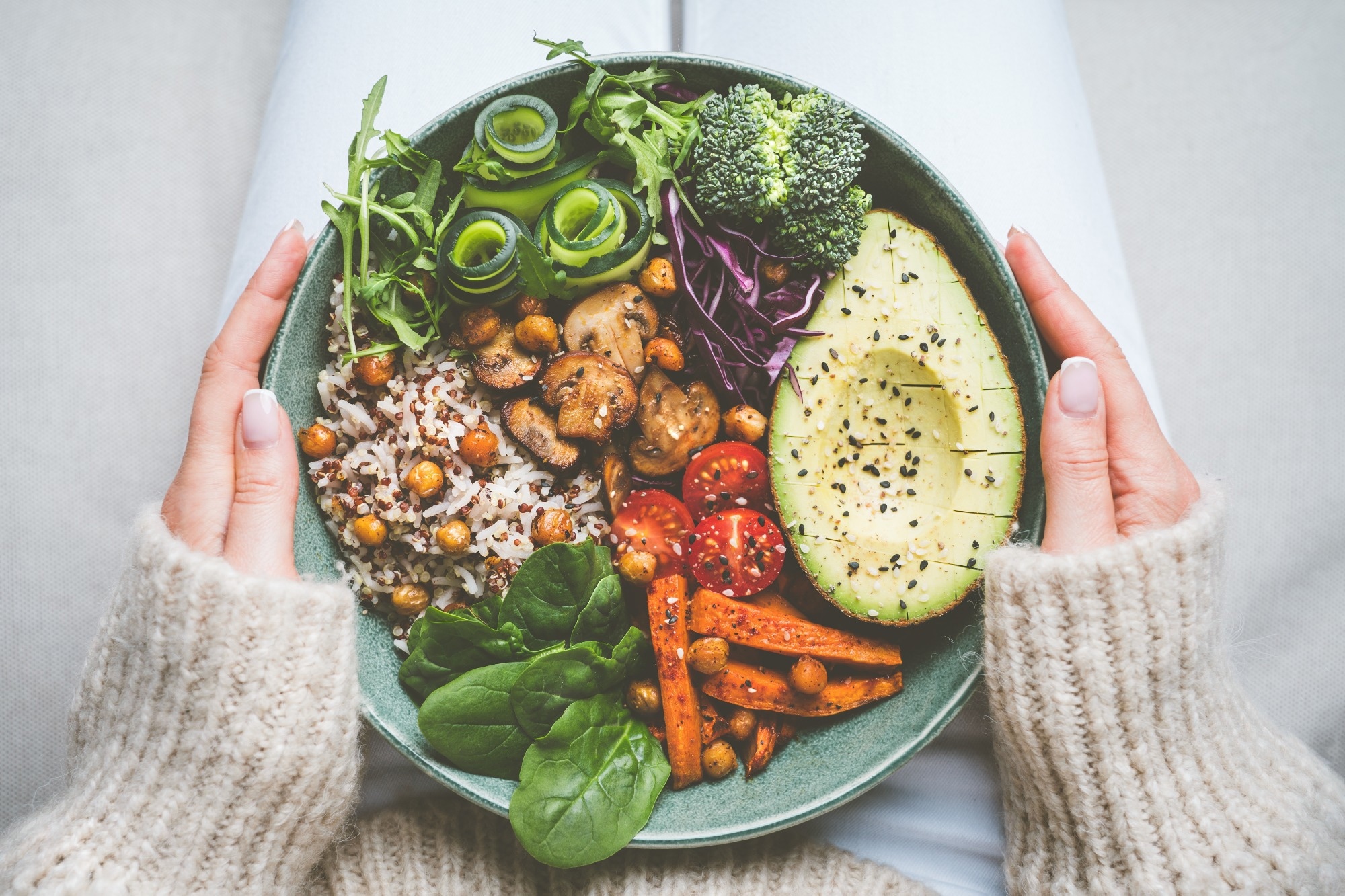
In a recent study published in Nutrients, researchers identified the most “popular” fad dietary patterns in the United States of America (USA), evaluated their dietary quality per the Dietary Guidelines for Americans (DGA), and presented opportunities for maximizing their nutritional quality.

Study: Opportunities for Maximizing the Dietary Quality of Fad Diets. Image Credit: Creative Cat Studio/Shutterstock.com

Background

Research suggests that most Americans follow a Westernized diet high in saturated and trans fats, sodium, sugar, and calories. Americans also overconsume refined grains, animal proteins, and alcoholic beverages.

Furthermore, around 80% of Americans habitually consume fewer fruits, vegetables, and fibers than recommended by the DGA.

Put simply, despite concerted policy-based and programmatic efforts to educate people about nutrition and healthy diets, most Americans do not follow public dietary guidelines. 

Accordingly, the population scored low on the Healthy Eating Index (HEI) from 2005 to 2016, as revealed in the DGA survey 2020–2025. Reports also suggest that 17% of American adults followed a special diet during 2015–2018.

Given the importance of dietary quality for long-term health, the quality of the American diet needs improvement. However, that requires detailed know-how of what Americans eat or popular fad diets in America.

About the study

In the present study, researchers identified the most “popular” fad dietary patterns in the USA and used the HEI scores to evaluate their dietary quality compared to the DGAs.

First, two independent researchers compiled a database of definitions and diet attributes from peer-reviewed sources, websites, popular books, and blogs, wherein they specifically used the keyword “fad diet” to identify common themes.

Common themes that appeared most frequently were then used as a framework to establish a comprehensive working definition of a fad diet.

Next, they thoroughly searched Google Trends©, using the most widely searched terms or phrases related to fad diets to identify the ‘popular’ fad dietary patterns for inclusion in the current study.

They conducted the initial search using the keyword “diet,” which returned 25 dietary patterns. However, after elimination based on duplication, relevance, and inclusion and exclusion criteria, eight fad dietary patterns made it to the final evaluation.

Then, researchers identified the specifics of each popular fad dietary pattern and their mechanism(s) of action concerning weight loss or health outcomes. These parameters were calorie limits, micronutrient compositions, restricted dietary components, required supplements, and special foods.

The researchers utilized the operationalized parameters of the popular fad dietary patterns to create one-week menus in the same way clinical dietitians devise a meal plan for patients. They ensured that the dietary quality of these menus complied with the DGAs to the maximum possible extent.

The team used the Automated Self-Administered 24 h (ASA24®) dietary assessment tool to analyze dietary intake data and determine HEI-2015 scores in the range of 0–100, where 100 indicated full and zero indicated low adherence to the DGAs.

The ASA24® tool also collected information on specific foods, portion sizes, drinks, and condiments in each sample menu, which helped the researchers calculate the means and standard deviations (SDs) per nutrient.

Based on this, they determined whether these menus met micronutrient requirements for both males and females aged 19–50 based on recommended dietary allowances (RDAs).

Results

In the current synthesis, the team categorized the popular fad dietary patterns as least, moderately, and most restrictive.

The DGA-compliant, plant-based/vegan, and fasting diets were the least restrictive. Military, paleolithic, and low-fermentable oligosaccharides, disaccharides, monosaccharides, and polysaccharides (FODMAP) diets were moderately restrictive.

Meanwhile, the ketogenic, carnivore, and liquid diets were the most restrictive.

After maximizing adherence to the DGAs for each popular fad dietary pattern, total HEI scores ranged from 26.7 to 89.1 for Carnivore and Low-FODMAP diets, respectively. The total calorie provision was the highest and lowest in the Liquid and Carnivore Diets at 2,143 and 1,302 kcal/day, respectively.

The majority of adequacy components for fruits, vegetables, and protein had high adequacy component scores. Other popular fad dietary patterns accommodated the maximal vegetable, fruit, and protein intakes except the ketogenic, carnivore, and liquid diets. 

ASA24 classified whole grains versus refined grains according to the theoretical menus. Therefore, whole grains consistently scored low, indicating submaximal adherence in all popular fad dietary patterns. Similarly, dairy/dairy alternatives showed submaximal adherence in six popular fad dietary patterns. On the contrary, except for the DGA-compliant, military, and liquid diets, the fatty acids ratios of other fad dietary patterns scored maximum points.

On the moderation component scale, sodium scores were consistently submaximal, indicating most fad dietary patterns supplemented excessive sodium, whereas refined grain, saturated fats, and added sugar scored high, representing low consumption.

Exceptionally, the ketogenic and the carnivore diets provided high amounts of fats from animal products.

In micronutrient analysis, calcium, vitamin D, potassium, and fiber emerged as nutrients of concern due to their underconsumption by Americans.

Notably, Vitamin D was only adequately supplemented by the paleolithic diet, whereas calcium was adequate in all except the paleolithic, carnivore, and ketogenic diets.

Furthermore, potassium was adequate in all but the ketogenic and carnivore diets, which also lacked fiber. Except for carnivore and ketogenic diets, all other dietary patterns had, on average, concerns about inadequate vitamin E and vitamin D intake.

Conclusions

Overall, the current study analysis showed that if carefully planned to follow the DGAs to the maximal extent, some of the popular fad dietary patterns have the potential to attain an HEI score of greater than 80. 

Five fad diets reached the cut-off threshold for high dietary quality, represented by higher HEI scores. These were the low-FODMAP, vegan, military, fasting, and DGA-compliant diets. Despite problematic nutritional adequacy, the ketogenic diet also showed the potential to achieve a high HEI score.

Furthermore, this analysis suggested that making small changes within the parameters of the dietary pattern returned promising strategies for improvement in dietary quality.

To conclude, many misconceptions exist regarding the “appropriate” way to eat. However, even popular dietary patterns have the potential to promote health.

How the Daughter of Sharecroppers Revolutionized Preschoolers’ Health

0
How the Daughter of Sharecroppers Revolutionized Preschoolers’ Health

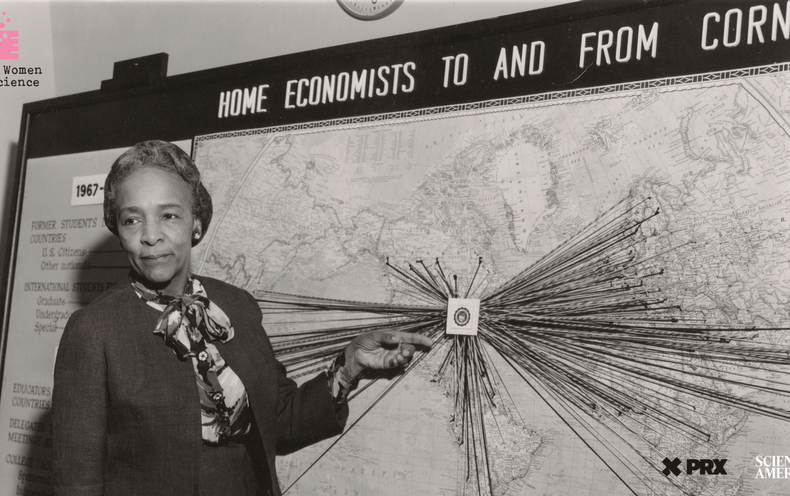
Flemmie Pansy Kittrell was a leader in the field of home economics, with a particular interest in the nutrition and holistic well-being of children from Black and low-income families. Born to sharecropping parents in North Carolina in 1904, Kittrell was the eighth of nine children. At just 11 years old, she started working as a cook and a maid, and she used the income to pay for her education over the years. In 1936 she became the first Black woman to earn a Ph.D. from Cornell University and the first Black woman in the country to earn a Ph.D. in nutrition.

But Kittrell was interested in more than food. She wanted to know how a child’s overall environment affected their success and well-being. In the 1960s she directed an experimental nursery at the campus of Howard University. This nursery would later serve as a model for Head Start, a federal program that provides for the early education, good health and nutrition of preschool children from low-income families. Kittrell would go on to travel internationally, studying and advising on matters of children’s health and nutrition.

LISTEN TO THE PODCAST

[New to this season of Lost Women of Science? Listen to the most recent episodes on Lillian Gilbreth and Lise Meitner: Episode One and Episode Two.]

Lost Women of Science is produced for the ear. Where possible, we recommend listening to the audio for the most accurate representation of what was said.

EPISODE TRANSCRIPT

Carol Sutton Lewis: Hello, it’s Carol Sutton Lewis here, and today I’m joined by Danya AbdelHameid who has a story for us.

Danya Abdelhameid: Hi Carol. So I want to start by telling you about a nursery in the 1960s. It was on the campus of Howard University in Washington D.C. This nursery was inside a modernist building, with a little playground tucked away in the back.

Caffey-Flemming: Most people didn’t know it was even there. You can’t see it from the main part of campus.

Abdelhameid: Dolores Caffey-Flemming was a student at Howard when she was hired to work there. Her job was to plan activities for the kids each week.

Caffey-Flemming: And it was very scary for me because when I went in I didn’t know what to expect. I didn’t realize how much you really need to know about a child.

Abdelhameid: Like, apparently, you weren’t supposed to give them sugar. Who knew? Dolores was young and inexperienced with kids. And now she’s spending all day with two to three dozen of them, tiny ones, aged three to four years old, making sure they were cared for physically, mentally, emotionally. It felt like a big responsibility. But she quickly settled into a daily routine with the kids.

Caffey-Flemming: They would come in the morning, and they would have breakfast. Then, of course, they had a little free playtime outside. And then they would have different activities. You know, it could be a story time. It could be finger painting. Every day was a different day, a different activity. 

Sutton Lewis: Yeah, that sounds like a nursery! [laughs]

Abdelhameid: But this nursery also had something else.

Caffey-Flemming: They had an observation booth with glass that you can see out and the children couldn’t see you.

Abdelhameid: The woman behind this nursery school slash laboratory was a Black home economist named Flemmie Kittrell. A very prim and proper 1960s lady. Went to church every Sunday. Always wore dresses or skirts, never pants. And even though she was dedicated to free play for the kids in this nursery, Flemmie herself did not play. 

Caffey-Flemming: She was very, very serious. She did not, you know, go for any foolishness.

Abdelhameid: Flemmie Kittrell was the chair of the Home Economics Department at Howard. Now, if you took home economics in school, you might just think of baking brownies and sewing pillowcases. You might not take it seriously. 

But in the 1960s, Flemmie and her fellow home economists conducted groundbreaking research on one of the most important questions of the day: how do you raise a child? They insisted there was a science to something a lot of people assumed was a matter of instinct.

It was an idea that was becoming as important to policymakers as it was to parents. In the mid-1960s, President Lyndon Johnson declared a “War on Poverty.” And he argued that the cause of poverty was that people just weren’t given a fair shot—they didn’t get the medical care they needed, the education to help them succeed, and that these problems started in childhood. So that seemed like a good time to intervene. But it was an open question: If you gave a poor kid a boost early in life, would it matter later on? Home economists like Flemmie Kittrell were determined to find out.

So today, you’ll hear Flemmie’s story, a woman just two generations removed from slavery, born to a family of sharecroppers in the South, who decided to conduct a radical experiment: take a group of Black kids living in poverty and put them in a really fantastic nursery. For two years, give them good food, fun activities, and a lot of love – and see what happens. Would they do better once they went off to school? How much of a difference would it make? How much does what happens early in a kid’s life shape the rest of it?

Sutton Lewis: This is Lost Women of Science. I’m Carol Sutton Lewis, and today I’m joined by Danya AbdelHameid who brings us the story of Flemmie Kittrell.

So, Danya, I am so excited to hear this story because this is a topic so close to my heart for two reasons. First of all, I host a parenting podcast. I also am a parent and I had all three of my children in program where they were two and three years old, and they were playing in room with an observational mirror, a one way where I could look in and they couldn’t see me, so I’m really excited to hear about how this all came to be and what Flemmie Kittrell learned.

Abdelhameid: I have so many questions about that, but I’ll just say the first thing is you being a parent is kind of already more experience than Flemmie herself had. She never raised kids, but like all of us, she did have some direct experience being a kid.

So Flemmie Pansy Kittrell – that was her full name – she was born in 1904 in Henderson, North Carolina, which is a small rural town near the Virginia border. 

Flemmie Kittrell: Now, uh, my mother had nine children, and I was the eighth of the nine. She had four girls and five boys. 

Abdelhameid: That voice is Flemmie’s on a scratchy old tape from 1977. She was interviewed just three years before she died as part of the Black Women Oral History Project at the Harvard Radcliffe Institute.

Sutton Lewis: Okay, wait, let me just stop right there. This explains why she didn’t have any children. She was one of nine kids. [laughs] I understand now why she had none of her own. Keep going, sorry.

Kittrell: Being the youngest, uh, almost the youngest member and the youngest, uh, girl in the family. I had the benefit of many of the privileges that my older brothers and sisters had had, uh, without having to work for them so to speak.

Abdelhameid: This is the early 1900’s and Flemmie is only two generations removed from slavery, meaning her grandparents were enslaved, and her parents were sharecroppers. They all lived in a four-room house on the lands that they farmed.

Allison Horrocks: This was not a family with a lot of resources. 

Abdelhameid: Allison Horrocks is a public historian, and her Ph.D. thesis was all about Flemmie Kittrell and the history of home economics. 

Horrocks: She always talked about her family really valuing education. You can say that, but to actually see her and her siblings getting this pretty big opportunity for the time period, I think really bears that out.

Abdelhameid: Flemmie and her two older siblings went to college at Hampton Institute, now known as Hampton University, a historically Black university in southeastern Virginia. And Flemmie got a scholarship and fellowships to cover some of the cost, but not all of it, so she had to work.

Horrocks: Everyone worked at Hampton. That was part of the ethic of the system.

Abdelhameid: This wasn’t new to Flemmie. She’d been working since she was 11 years old, first as a nursemaid during summer breaks, then as a cook for wealthier families.

Horrocks: And she actually does domestic service while she is a high school and college student as part of earning her keep. 

Abdelhameid: When she was in high school, getting ready to go to college, Flemmie had no interest in studying home economics. It was the last thing she wanted to major in.

Kittrell: I had thought I wanted to be in political science or some field like that. And then one of my teachers, Mrs. Rollonson, um, called me in one day, just as I was about to graduate from high school, and wanted to know what had I decided to do for the future. And then she said, well, have you thought of home economics? And I said, well, I don’t think I’d like that. I didn’t have a good reason, except I just thought the home was just so ordinary. You know all about it anyway. 

Abdelhameid: But Mrs. Rollonson doesn’t let it go – she points Flemmie to a new book that just came out. Tells her to read it and to let her know what she thinks. 

Kittrell: And it was a book on the life of Ellen H. Richards.

Abdelhameid: Her full name was Ellen Henrietta Swallow Richards – and she was a chemist, MIT-trained. In fact, she was the first woman to attend MIT in 1871. She mostly focused on sanitation and water quality, and her work led to some of the first-ever state water quality standards in the nation. But there was something bigger driving Ellen’s research.

Horrocks: She wanted to apply scientific principles to everyday problems. 

Abdelhameid: According to Ellen, science was the answer to all of the world’s problems, including the problems of the home. And in her view, we could use science to cook better, more nutritious food. To clean our homes better. I should say, the “we” here is really women. That’s who was usually concerned about these sorts of things. 

So Ellen insisted that women needed to have opportunities to learn about science, like chemistry, physics, botany, but only in the pursuit of becoming better homemakers and mothers. And soon, Ellen’s work would spawn a brand new field – it was called home economics. 

Sutton Lewis: Home ec.! I loved home ec. 

Abdelhameid: Most commonly probably known as home ec. I don’t think anybody really says the full name. The economics part refers to using time and energy economically, but basically, it was the science of everything domestic. And as great as that all sounds, it’s important to note that the conference that launched this new shiny field took place annually at Lake Placid in a resort that banned Black and Jewish people. And the field of home economics itself would remain segregated for decades.

Sutton Lewis: Yikes. Oof.

Abdelhameid: Yeah, yeah.

Abdelhameid: The history of Ellen and of home economics was laid out in the book Flemmie’s teacher recommended, though the book mostly skips over the field’s racism. And if Flemmie knew anything about that, it didn’t deter her. She was inspired. Imagine – she probably would’ve been twenty years old at the time, reading about how this new burgeoning field could help people live better lives. And around the same time that Flemmie was being introduced to all of this, there was something else that happened. 

Horrocks: She had a close family member, one of her sisters, died of something called pellagra. 

Abdelhameid: Her name was Mabel Kittrell. She was Flemmie’s older sister and was twenty-two years old when she died of pellagra. 

Horrocks: It’s a vitamin deficiency.

Abdelhameid: Specifically a deficiency of niacin, or vitamin B3.  And during the 20th century, pellagra was widespread in the South where low-wage Black laborers like Flemmie’s sister Mabel lived off of salt pork, corn meal, and molasses. It’s a diet that’s low in niacin, or at least the kind that our bodies can readily absorb. 

Poor Black Southerners who developed the disease would get these rough, scaly skin sores all over. They would develop early signs of dementia – lethargy, confusion, tremors. And if left untreated for years on end, pellagra is deadly. Like in the case of Flemmie’s sister, Mabel.

Horrocks: And she never talks about this in her records, but I, you know, was able to find that out in public records. She becomes very keenly interested in nutrition and vitamins. 

Abdelhameid: And here is this woman, Ellen Richards, talking all about the science of nutrition and how we can use science to make sure no one goes hungry. I can see why it would resonate with Flemmie. 

Horrocks: And so this kind of personal connection, right, is not one that she draws, but the work of the historian is to say there probably is a connection here, right? A person who feels these kinds of losses very deeply and gets inspired to do something on a big scale.

Abdelhameid: Flemmie graduated with a Bachelors in Home Economics in 1928 and went on to do graduate work at Cornell,  first for a master’s and then she went to do her Ph.D in Home Economics in 1936.

Sutton Lewis: Okay, Flemmie is graduating from Hampton and then doing graduate work at Cornell, getting a Ph.D. in home economics in 1936, an African American woman – that’s pretty incredible.

Abdelhameid: She actually was the first black woman to get a Ph.D. from Cornell, and one of only four hundred women in the whole country to get a doctorate that year.

Sutton Lewis: A Black Ivy League graduate in 1936, who takes her brilliance and applies it to try to help the Black community? That, that’s very impressive. 

Abdelhameid: Yeah, and to kind of take that further for her thesis, she decided to look into nutrition in the Black community in Greensboro, a city one hundred miles east of Henderson, North Carolina where she grew up. This was the 1930’s, in the midst of the Great Depression. And Flemmie wanted to understand how all of this was impacting Black families, specifically in terms of what they fed their newborns and young children. So she went door-to-door, visiting the homes of Black families in the Greensboro area and asked them. She interviewed Black parents and had them fill out daily charts logging their meals and what they fed their newborns, and she surveyed doctors and midwives at the local hospital. What she found parsing through all of that data was damning. She found that Black infants died at a rate that was nearly twice that of white infants. That most families had, on average, three children, and of those three on average, two wouldn’t make it to adulthood. 

But, Flemmie didn’t stop there.

Horrocks: She is able to show, through meticulous research, that through certain kinds of feeding… 

Abdelhameid: Like using formula when milk was in short supply.

Horrocks: You could save babies’ from starving to death. That must have been an amazing achievement, right? To feel that you could use science to keep people alive. And that you didn’t need to be a certain kind of medical expert, but that by working with people and understanding them, you could be a real value to your community. 

Abdelhameid: Flemmie got her start in nutrition, but it didn’t take long for her to expand to other things. She wanted to know what it takes to raise a child. Start to finish. Body and mind. All of it. The science of it.

Horrocks: That is a really strange concept, I think, to a lot of people today. And it strikes at the heart of home economics, which is, you don’t want to think that there’s a science to people loving you, right? And like, making a house a home. And home economists would say there is, that there actually is an art and a science that can be identified and studied and pinned down. And again, I think part of where home economics just hits such a cultural soft spot is this idea that you have to be taught how to take care of a child. When so much of our cultural messaging is that some people are born knowing how to do it.

Sutton Lewis: Exactly! Certainly you know how to hug and love and cuddle and kiss a child, but who knows how to enrich a child? That’s not something that you are born knowing. I mean that really hits home with me, the concept of there being a science that can be identified and studied and pinned down. I truly believe there are skill sets that parents can actually learn. And we all know to varying degrees just loving children just isn’t enough. Every parent should hear this.

Abdelhameid: Yeah, I think, looking through Flemmie’s work and her life, she agreed with that and she had the same sort of understanding and approach. So after she graduated, she set up research labs.  First at Bennett College in North Carolina, then at Hampton, her alma mater, and then in the 40s, at Howard University in Washington D.C. And these labs were really nurseries where she could closely observe children and develop the art and science of raising them.

And Flemmie was especially interested in knowing what these nurseries could do for poor kids. Kids whose families didn’t have a lot of resources. Could a really good nursery prepare them for school? Could it close the academic gap with more privileged students? And in the long run, could it change their lives? In the 60’s, Flemmy and a team of researchers decided to find out.

=== BREAK ==== 

Caffey-Flemming: Dr. Kittrell, let me tell you, she was my idol. I really and truly loved her. 

Abdelhameid: That’s Dolores Caffey-Flemming, who you heard at the beginning of this episode. She got her bachelor’s and master’s in child development from Howard in 1968. And when Dolores thinks about Flemmie Kittrell, there’s one particular memory that comes to mind.

Caffey-Flemming: For 4th of July, I was supposed to go to Rock Creek Park with my boyfriend. We were having a cookout for the day and everything. But, I had to meet with Dr. Kittrell in the morning.

Abdelhameid: And that particular day, they were reviewing an assignment Flemmie had given Dolores. 

Caffey-Flemming: I had completed my assignment, but it wasn’t to her liking.

Abdelhameid: They go over the assignment, and then the phone in the Home Economics office rings. It’s for Dolores. 

Caffey-Flemming: My boyfriend was wondering, you know, what time are you going to be finished? Because it was past the time we were supposed to be going. Next thing I know, she took the phone from me and she said, Young man, do you understand that she has work to do? She doesn’t have time to talk to you today. And so, I was so embarrassed, I was like, oh my gosh, but she, she meant it. 

Abdelhameid: Flemmie could be tough. But it sounds like Dolores was glad to take directions from her. She’d been doing it since they met. It was Flemmie who’d told her to study child development in the first place. And hired her to work at the nursery.

Every part of this nursery was meticulously planned. The children were fed  nutritious, homemade meals – cooked and planned by students in the Home Economics Department, of course. The nursery was bright. It had books, puzzles, a terrarium, swings, and a slide. And the children got check ups from doctors and nurses at Howard’s Medical School. 

Flemmie also had rules about how the nursery staff should treat the children – Eye contact. Give them hugs. And they had to smile at them, too. Here’s Flemmie again: 

Kittrell: I think that, uh, in working with children, this is very evident, that if you smile at a child or have a pleasant face at a child, he will eventually come your way. So that looks like I could be a good kidnapper, doesn’t it? [Laughs]

Abdelhameid: Now, a lot of the time the nursery was taking in the sons and daughters of Howard doctors, professors, and other staff affiliated with the university, kids with pretty successful parents and some level of access to resources, but Flemmie wanted to know what could a good nursery do for poor kids. How much of a difference could it really make? So in 1964, Flemmie and her team got to work to find out. They started with the kids right next to the Howard campus, in poor, mostly Black neighborhoods. Home economics students went door to door looking for candidates.

There was a long list of requirements. Kids had to be at least three years old, no older than three years, six months. They had to be in good health, have good vision, speak English, etc, etc. And they had to agree to be subjects in a research study. But the nursery was offering parents high-quality childcare at a world-class institution for free because the federal government was footing the bill.  It was a pretty good deal even with all those requirements.

They got two hundred interested families. And from there, the team put thirty eight children in the “experimental group.” These were children who were admitted to the nursery – and they put sixty children were in the comparison group, a similar cohort that was not admitted to the nursery. 

And so every weekday morning, a stream of little research subjects toddled off of a school bus, into the lab.

Caffey-Flemming: And that was a part of our training was to be able to observe and take notes. 

Abdelhameid: And these notes were thorough. Here’s an example:

9:40, the Head teacher has entered the area and proceeds to play with Norma. Norma is playing with some dolls. The teacher encourages Norma – who was quote “one of the most backward children in the nursery.” Another child named Greta comes over…they tug at the doll. And Norma tries to hit Greta on the head with the doll…and then, another child [laugh] named Judith comes over…

Sutton Lewis: Okay, I have to go back to the toddler center experience I mentioned earlier.  As a parent, you watch this and you’re aghast, but the researchers look at this as a really interesting study of human behavior in small children. And in my experience they, they had all sorts of theories that made this interplay so much more significant and useful than just somebody bopping somebody over the head. And so, this stuff is golden. golden. 

Abdelhameid: Yeah, and the research questions they were asking here couldn’t be any bigger. Or more relevant at the time.

Reporter: The first thorough study of Negroes and how they live in this country was completed only a few months ago.

Abdelhameid: In 1965, the U.S. Department of Labor published a big, sweeping report written by a white sociologist named Daniel Moynihan. It was called The Negro Family: The Case For National Action, though it was better known as just the Moynihan Report. 

Reporter: Daniel Moynihan, until this summer, Assistant Secretary of Labor, was in charge of the study and was staggered by it. Moynihan says the Negro family structure is collapsing.

Abdelhameid: The report was actually meant to be an internal document, but somehow it got leaked to the press, and well, it took off from there.

Moynihan basically said the Black community was in crisis. He blamed three centuries of slavery and continuing anti-Black racism, and he concluded that as a result, Black families were essentially broken.  

Horrocks: There are famous lines from that report that talk about essentially webs and tangles of pathology. Of, you know, absent fathers and overbearing mothers. It is the basis for a very unfortunate number of stereotypes about black families in this country today.

Abdelhameid: Moynihan was a white man, coming in and detailing everything he thought was going wrong with Black communities. The report was then and continues to be extremely controversial. And Flemmie’s thinking was actually in some ways very similar to Moynihan’s. She’d also been studying Black families, had written about the challenges they faced. 

She wrote that most Black children don’t have quote “constructive” early years. And like Moynihan, she attributed many of the problems Black families faced to the legacy of slavery and the damaging effects of poverty.

But instead of writing about “tangles of pathology,” Flemmie took the dire statistics and went in a different direction. A more hopeful one. She insisted that there were tools that could help, and advocated that they be given to Black families.

Horrocks: And this is where that divergence between people who work closely with families on finding solutions to problems versus the people who see the people as problems, right, who see the family members as problems to be solved.

Abdelhameid: Flemmie rarely, if ever, talked about racism explicitly, at least not in public. She just got on with the work of problem solving, figuring out what worked and what didn’t, but…

Horrocks: She’s also making what you could see now as an anti-racist argument that there are not communities of bad parents or bad families. There are people who have not been given support, and that with government and intellectual and academic support, people can become amazing parents because they have that potential.

Abdelhameid: If the media was running with the Moynihan Report, saying Black families were broken, Flemmie was saying, disadvantaged Black families would thrive with support. And that part of that support was giving them a great nursery. So how much of a difference could that really make? They were about to find out.

In 1968, four years after the nursery study began at Howard, the federal Children’s Bureau released a ninety two-page report of the findings. And even though the research team had looked at a whole range of outcomes, a lot of the final report focused on one in particular: IQ. 

So a lot of people think of IQ as an objective measure of intelligence. That view’s become increasingly controversial. But back in the 60s, the report writers were explicit that that’s not how they thought of it. It wasn’t about kids’ intrinsic abilities. Cultural disadvantages could result in lower scores on these tests. But at the same time, those scores still mattered. Because they predicted other culturally unfair measures of success. 

So the normal range for IQ is considered to be between 90 and 110. At the start of the experiment, the average for the kids in the experiment was in the low 80s.  

Two years later, the average IQ of the children at the nursery had shot up by more than 14 points, putting them squarely in the normal range. While the comparison group – these were the kids who weren’t admitted to the nursery – their IQ only went up by only four points. The children also made gains on two other tests related to language ability, grammar, and comprehension.

And then, there were those less quantifiable changes. When researchers asked parents to reflect on what the nursery program had done for their kids, they said things like this:

Cindy was shy and selfish before coming to the nursery school. She talks now and is not selfish.

The nursery school has helped Teresa to think. Her conversations now make sense.

The kids in Flemmie’s care seemed to be doing well. But what about later? Would an early boost set them up for later success?

So the researchers followed the kids for a few more years—through kindergarten, and the first few grades of school. At first, these kids got some extra supports, like free breakfast and lunch, but in the third grade, the program was over. No more special supports. They were attending public school like other kids, and monitored to see how they were doing. 

And in researchers’ final report, they are in a totally different place than when they started. By the end of the fourth grade, the IQs of kids in the experimental group had dropped way down, and were no higher than the comparison group. 

And this report is gloomy. I don’t know if I’ve ever read a report quite as openly negative as this. It says that this is yet another program that showed “glowing early promise” that soon began to fade. But that it’s important to report on failures—like this program. Yeah, they called this program a failure. And so to the core question, can preschool ensure the later success  of low-income children? The researchers regretfully concluded “No.” 

So what was the point of all those meals and hugs and activities? As far as these researchers were concerned, just to find out what doesn’t work.

But the story doesn’t end there.

Lyndon Johnson: Today we’re able to announce that we will have open and we believe operating this summer coast to coast some two thousand child development centers, serving possibly a half a million children. 

Abdelhameid: In 1965, President Lyndon B. Johnson made a big announcement. 

Johnson: This means that nearly half the preschool children of poverty will get a head start on their future. 

Abdelhameid: Head Start was a crucial part of President Johnson’s War On Poverty. Now, this was 1965. Flemmie’s nursery project hadn’t wrapped up yet. The gloomy report wouldn’t come out for another few years. And there was a lot of optimism about what an early intervention like this might do for a kid living in poverty.

Lauren Bauer: So the theory of change of the War on Poverty was to stop poverty before it starts.

Abdelhameid: Lauren Bauer is a fellow in economic studies at the Brookings Institution and has studied the Head Start program extensively.

Bauer: One of the ideas that was really generated during this time was the idea that poor children don’t have to be poor. And because you were born poor, it doesn’t mean that you have to be for the rest of your life.

Abdelhameid: The early incarnation of Head Start was a much more modest intervention than Flemmie’s. Instead of two years of preschool, Head Start was just an eight-week summer program.  

But over the years, it’s expanded to serve kids ages three to five years old across the US. The federal government pays for about a million kids across the country to attend preschool for free each year. Some kids are in part-day programs, some in full-day. All of this costs about ten billion dollars a year. And it includes Early Head Start, which started in 1994 to serve kids from birth to age 3.

But in the early 2000s, the department of Health and Human Services started a massive study to see whether it was working. It was called the Head Start Impact Study. They ended up putting out a series of reports over the years. And just like that gloomy study of Flemmie’s kids, they found that the effects of Head Start didn’t seem to last. Kids would participate in the program, have a nice pre-school experience, some small improvements in cognitive skills, but pretty soon, the gains they made faded out. By the third grade, the researchers couldn’t detect any lasting effect of Head Start.

Bauer: Surely it makes sense that if you get a tremendous education when you’re four and a terrible education when you’re five and six and seven, how much do we expect your education at four to protect you against what’s happening when you’re eight?

And that’s a lot of where the conflict comes in because you have people who frankly don’t really love investing money this way being like, well, we expect a lot of it. You’re telling us it’s the greatest thing that’s ever happened. Why aren’t they doing better in third grade?

Abdelhameid: But Lauren Bauer and others decided to look deeper and found a few issues with the study. Some very basic things. 

Bauer: Random assignment didn’t work. It was not blind, much less double blind. And, there were plenty of kids in the control group who actually ended up going to Head Start because their parents really wanted them in Head Start, and sometimes they went to the center where the random assignment went sideways and sometimes they just went to the center across the street and said, oh, no, no, no, no, no, my kid is going to Head Start. I don’t care if there was this experiment where they told me I couldn’t.

Abdelhameid: So like a lot of sociology experiments, it was hard to create that experimental ideal: a randomized, controlled, double-blind study. But with some fancy math, you can parcel out the effects of Head Start. Take that, and other studies, and researchers have found that actually, the Head Start Impact Study missed something big. Head Start works. It might not be obvious in third grade test scores…but keep following those kids…and the benefits of Head Start become clear. Because study after study has found that kids who go to Head Start are significantly more likely to graduate from high school.

Bauer: And like we’re talking like up to ten percentage points, which is a big number. And  it’s also true that they’ve been more likely to go to college. And even in some studies, graduate from college and that too, same trajectory, that’s life changing for a child who grew up in poverty in the 60s and 70s. To be a child who grew up in poverty in the 60s and 70s and be more likely to have graduated from high school and go to college—like those families are living different lives.

Abdelhameid: And it’s not just the kids who go to Head Start that get a boost.

Bauer: There are second generation consequences. So the kids of mothers who went to Head Start are more likely to graduate from high school, less likely to be teen mothers, less likely to have a criminal record. Like, going to Head Start in the early days not only changed your lives, it changed the trajectory of your family.

Abdelhameid: Lauren says Head Start works best when kids are in school districts that keep offering additional support after the preschool program ends. In that case, you don’t see that fade out in the early years of school. But even just Head Start alone, it pays off.

So you have to ask if Head Start is so effective, why would the effects disappear in the third grade and then come back later on in life? Lauren thinks it’s a lot of non-cognitive skills

Bauer: A study that I did saw increases in self esteem and other sort of non-cognitive outcomes, so self control, self regulation, so we saw that. And so if those things are happening, maybe in third grade the kid could sit still through the test, but still didn’t know the information they were tested on. But that kind of stuff sure helps you graduate from high school. Like, can I persist through this terrible high school? Yes, I can persist because I learned how to self regulate because I got to go to preschool.

Sutton Lewis: Well, I know for certain that I was actively interested in pouring things into my children when they were really young without a real sense that it was going to pay off by third grade. I mean, all the things that are part of a Head Start experience, playing, interacting with other people, their little peers. These things, learning how to relate to people, learning how to argue over a toy successfully, learning how to sit still as Lauren said. They really do serve you. Maybe you’re not grasping spelling or some of the fine points of academia in third grade, but you’re learning the way to learn. So it really does make sense to me that you can have a successful program that doesn’t bear fruit early. And if it doesn’t bear fruit in the third grade, it doesn’t mean that it was a waste of time or money.

Abdelhameid: So that brings us back to the question, does Head Start work? Lauren’s answer is an emphatic yes. And all of this is part of Flemmie’s legacy. Flemmie’s role in Head Start been a bit tricky to piece together, but we know her work wasn’t just a precursor to the program. She was part of it. By 1965, she was a recognized expert in child development and in running these kinds of programs. So when Head Start  launched, she was deeply involved, creating instructional materials, training child care workers. She actually trained about two thousand Head Start workers.

Since 1965,  Head Start has served more than thirty eight million children. It’s a massive, well-known federal program. But when people talk about the origins of Head Start, Flemmie’s name doesn’t usually get mentioned.

Horrocks: She’s kind of cited as a footnote in Head Start because the big federal money does not really go to people in her field. It goes more to male child psychologists and folks like Sargent Shriver really get a lot of the credit for Head Start. He’s always called the father of Head Start.

Abdelhameid: Sargent Shriver was a lawyer – Yale graduate – and the brother-in-law of President John F. Kennedy. And after Kennedy was assassinated, Shriver was tapped to head up President Lyndon Johnson’s War on Poverty program. 

His name pops up a lot in histories of the Head Start program. Flemmie’s name, on the other hand, is a bit harder to find. And sometimes her name doesn’t show up at all. 

Sutton Lewis: And that ladies and gentlemen is why we have Lost Women of Science. Yet another instance where a woman scientist’s work has been swept under the rug but no longer. 

Abdelhameid: You’re absolutely right, Carol. And by the way, there’s one other reason why Flemmie in particular has been forgotten. Home economics, the field that Flemmie is so passionately rooted in – was falling out of favor. 

Horrocks: By the 1960s people are already starting to disparage the field. To a lot of people outside looking in, it lacked focus. Right, like a general degree in home economics, without further inspection, just kind of looked like a degree in keeping a house. 

Abdelhameid: This is also right about the time that early childhood development becomes its own field of research. It’s not falling under the banner of “home economics” anymore. 

Horrocks: And in the post-World War II period, a lot more men enter that field as a function of the G.I. Bill. A lot more men are working with child development and all of those areas. And women start to really get pushed out.

Abdelhameid: And as all of this is happening, Flemmie was not really around to promote her research in the field or defend home economics. She wasn’t in the country that much. She was traveling to the Congo, Liberia, India, studying malnutrition, helping set up Home Economics departments abroad.

Horrocks: If you were a top home economist, by the 1960s, you were almost never on campus. That’s a problem.

Abdelhameid: And today, home economics doesn’t really exist in the same way it did during Flemmie’s lifetime. Most people know it as the middle or high school class where they made brownies or learned to sew. But Flemmie’s approach does live on. Taking early childhood very seriously, looking at children’s well-being holistically, that’ll be very familiar to any modern parent. 

And of course, there’s Head Start. Thanks to Flemmie and others like her, tens of millions of kids have been through this program. It’s not just a safe place for them to go while their parents are working, but a place where they get fed, where they might see a dentist or a doctor for the first time. Where they get a boost to their self-esteem and skills that might just last through school, and high school graduation, and into the ways they parent their own kids. But at its core, Head Start is just a place where kids are surrounded by friendly faces playing with them, reading them books, and just smiling at them, like Flemmie insisted they do.

This episode of Lost Women of Science was hosted by me, Danya AbdelHameid.

Sutton Lewis: And me, Carol Sutton Lewis. It was written and produced by Danya with senior producer Elah Feder. Lizzie Younan composed our music. Alex Sugiura sound designed and mastered this episode. 

We want to thank Jeff Delviscio, chief multimedia editor at our publishing partner, Scientific American and our executive producers Amy Scharf and Katie Hafner. 

Abdelhameid: I also want to thank the Schlesinger Library, part of the Harvard Radcliffe Institute. Flemmie Kittrell’s oral history interview was recorded as part of the library’s Black Women Oral History Project.

Sutton Lewis: Lost Women of Science is funded in part by the Alfred P. Sloan Foundation and Schmidt Futures. We’re distributed by PRX. See you next week!

—————

Episode Interviewees:

Dolores Caffey-Fleming

Former Howard University student

Program Director of Project STRIDE, Charles R. Drew University of Medicine and Science Willowbrook, California

Allison Horrocks

Public Historian

Lincoln, Rhode Island

Lauren Bauer

Fellow, Economic Studies

Brookings Institution

Washington, D.C.

Further reading/listening/viewing:

Flemmie Kittrell audio interviews, Black Women Oral History Project Interviews, 1976–1981, the Harvard Radcliffe Institute’s Schlesinger Library Institute

Kittrell, Flemmie, The Negro Family as a Health Agency, The Journal of Negro Education, Vol. 18, No. 3, The Health Status and Health, 1949

Baure, Lauren, Does Head Start Work?, The Brookings Institution, 2019

Horrocks, Allison, Good Will Ambassador with a Cookbook: Flemmie Kittrell and the International Politics of Home Economics, University of Connecticut, 2016

First report on Howard Preschool Experiment: Prelude to School: An Evaluation of an Inner-City Preschool Program, Children’s Bureau (DREW), Washington, D.C. Social and Rehabilitation Service, 1968 

Talbot, Margaret, Did Home Economics Empower Women?, The New Yorker, 2021

Zigler, Edward, and Muenchow, Susan, Head Start: The Inside Story Of America’s Most Successful Education Experiment, 1994.

Sen. John Fetterman opens up about stroke, depression in Men’s Health profile

0
Sen. John Fetterman opens up about stroke, depression in Men’s Health profile

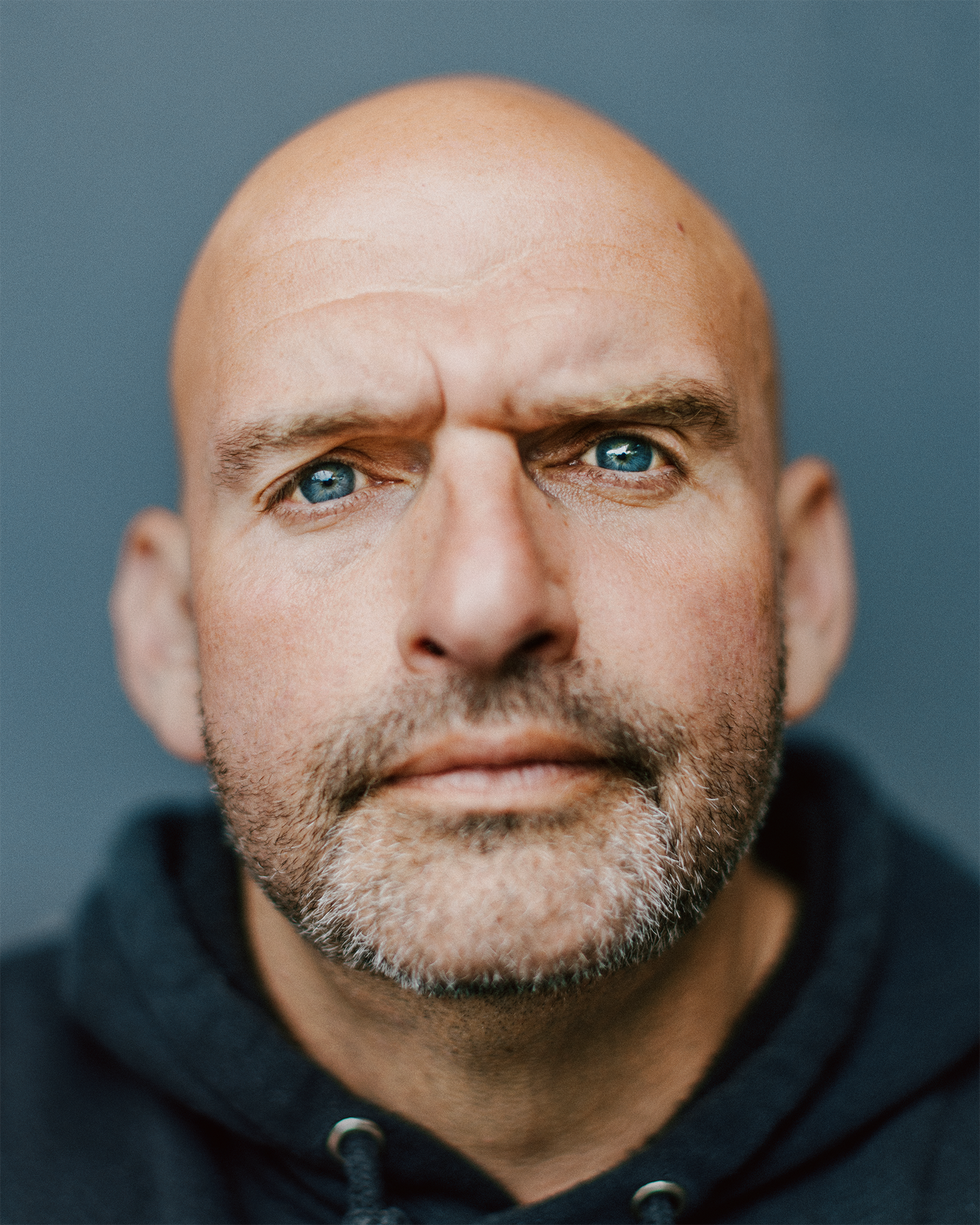
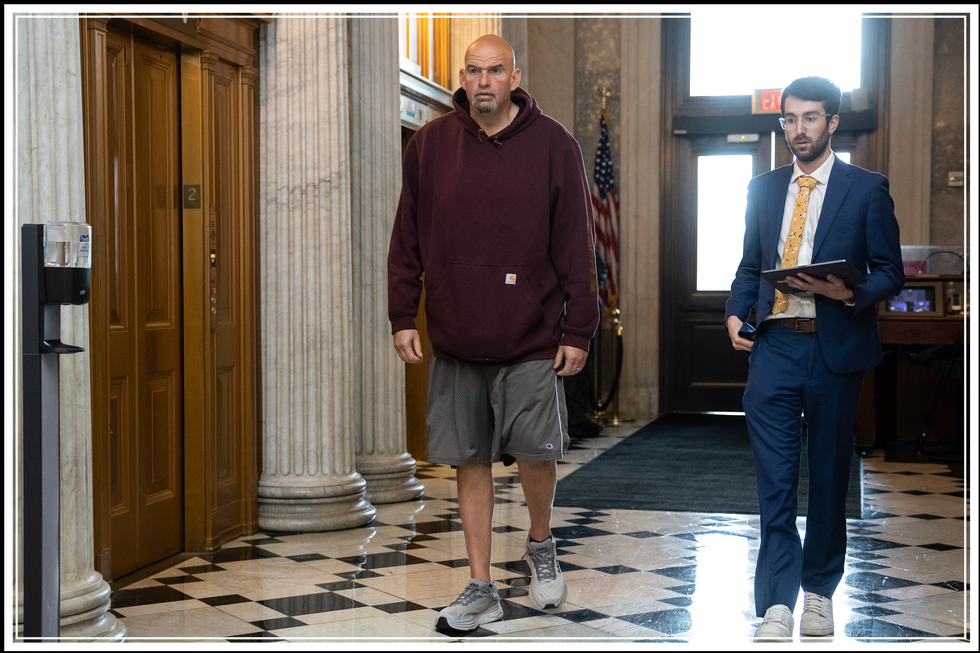
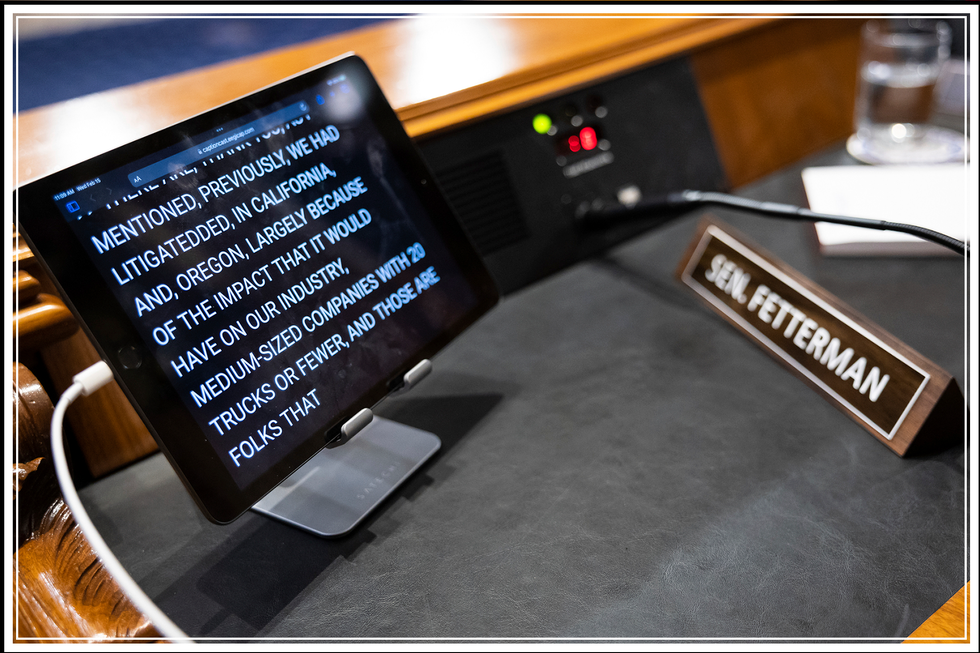
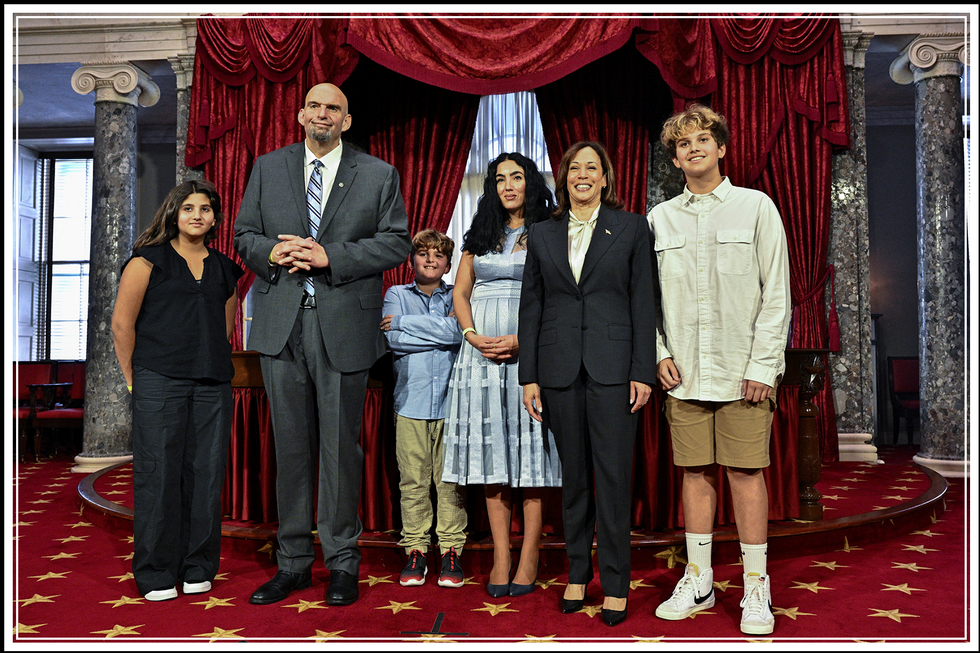
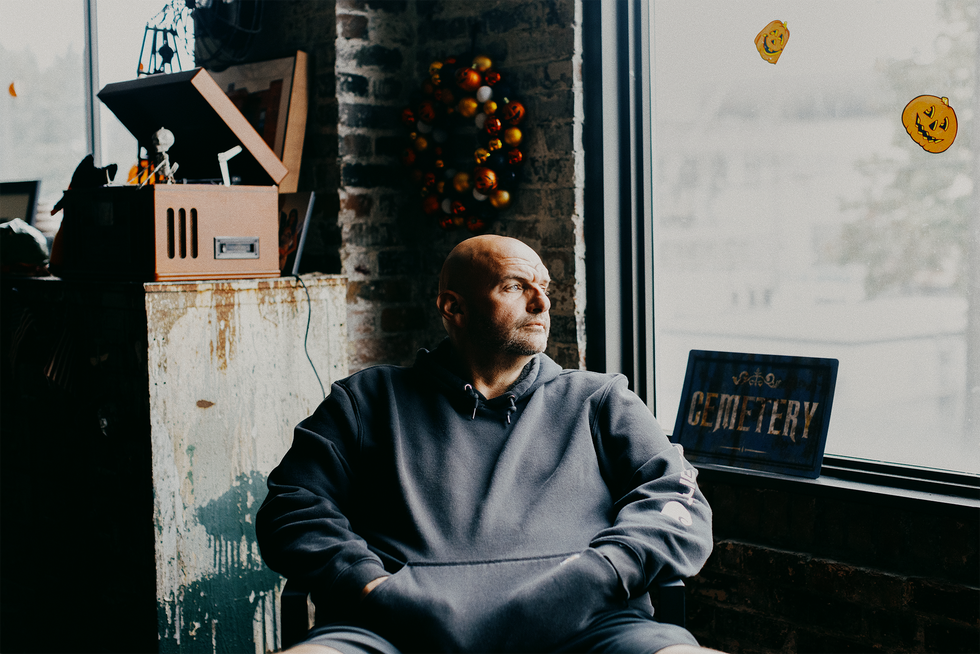
Pennsylvania Sen. John Fetterman will be featured in the December 2023 issue of Men’s Health, which includes a discussion about his battle with depression, a stroke and running for U.S. Senate in the same year.Fetterman was elected to the U.S. Senate in November 2022. Earlier that year, in May, just four days before the Pennslyvania primary election, Fetterman had a stroke.After his stroke, Fetterman had to debate Republican candidate Mehmet Oz, where he thought his debate performance would ensure his loss.”I knew it was going to be rough…I have an overpolished TV guy like that—but I believed that people deserved to know this is where I’m at. This is what’s been done to me. So I did it, and I knew it was rough.”Despite the stroke and thinking his debate performance was rough, Fetterman continued to run for Senate, beating Oz.After being elected to the Senate, Fetterman began experiencing symptoms of depression and admitted himself into the hospital for treatment.In the interview with Men’s Health, Fetterman opens up about his struggle with depression and why he is grateful to be here. Fetterman states that while he was unsure if he had suffered from depression before, he had experienced an altered mental state.“I don’t even know if I’d call it depression, but melancholy,” Fetterman said.Since returning from the hospital to the Senate, Fetterman has become an advocate for mental illnesses. He stated that he hopes talking about his experience encourages others to get the help they may need.“It’s more like affirming gratitude. It’s like, my God, I don’t want anybody else to suffer. Isn’t that what any politician should really want out of his or her career, to reduce suffering and make things better?”As for now, Fetterman said he’s proud of his journey.“Now it’s just being the kind of senator that Pennsylvania deserves. And I’m grateful for the choice that they made to give me the ability to serve, and I think the depression has made me a much more effective and empathetic senator. After kind of dying, I’m just grateful for any time, whatever that is.”Fetterman’s feature in Men’s Health will be in the December 2023 issue and in newsstands on Nov. 21.If you or a loved one is struggling, the universal phone number to call for suicide prevention is 988.Men’s Health is owned by Hearst, the parent company of this television station.

Pennsylvania Sen. John Fetterman will be featured in the December 2023 issue of Men’s Health, which includes a discussion about his battle with depression, a stroke and running for U.S. Senate in the same year.

Fetterman was elected to the U.S. Senate in November 2022. Earlier that year, in May, just four days before the Pennslyvania primary election, Fetterman had a stroke.

After his stroke, Fetterman had to debate Republican candidate Mehmet Oz, where he thought his debate performance would ensure his loss.

“I knew it was going to be rough…I have an overpolished TV guy like that—but I believed that people deserved to know this is where I’m at. This is what’s been done to me. So I did it, and I knew it was rough.”

Despite the stroke and thinking his debate performance was rough, Fetterman continued to run for Senate, beating Oz.

After being elected to the Senate, Fetterman began experiencing symptoms of depression and admitted himself into the hospital for treatment.

In the interview with Men’s Health, Fetterman opens up about his struggle with depression and why he is grateful to be here.

Fetterman states that while he was unsure if he had suffered from depression before, he had experienced an altered mental state.

“I don’t even know if I’d call it depression, but melancholy,” Fetterman said.

Since returning from the hospital to the Senate, Fetterman has become an advocate for mental illnesses. He stated that he hopes talking about his experience encourages others to get the help they may need.

“It’s more like affirming gratitude. It’s like, my God, I don’t want anybody else to suffer. Isn’t that what any politician should really want out of his or her career, to reduce suffering and make things better?”

As for now, Fetterman said he’s proud of his journey.

“Now it’s just being the kind of senator that Pennsylvania deserves. And I’m grateful for the choice that they made to give me the ability to serve, and I think the depression has made me a much more effective and empathetic senator. After kind of dying, I’m just grateful for any time, whatever that is.”

Fetterman’s feature in Men’s Health will be in the December 2023 issue and in newsstands on Nov. 21.

If you or a loved one is struggling, the universal phone number to call for suicide prevention is 988.

Men’s Health is owned by Hearst, the parent company of this television station.

How Hospitals Are Prioritizing Community Support for Children’s Mental Health | Health News

0
How Hospitals Are Prioritizing Community Support for Children’s Mental Health | Health News

The state of children’s mental health was already a concern before the COVID-19 pandemic. Since 2020, many hospitals and emergency departments across the country have reported a sharp uptick in demand for behavioral health services.

In response to this crisis, children’s hospitals are redoubling efforts to tackle these issues and putting renewed emphasis on leveraging community partnerships to increase access to quality mental and behavioral medical care, according to a panel of experts who spoke during a recent U.S. News & World Report webinar.

Given the great demand and a relative shortage of clinical staff to address the needs, “we’re 10 years behind the eight-ball here already, and the pandemic only laid bare some of those disparities in care, access and care quality,” said Dr. Ron-Li Liaw, who serves as Mental Health in-Chief at Children’s Hospital Colorado.

“We’re really thinking about mental health at every single table and every single key decision,” she said, “whether it’s from the policy or the primary [care] integration front, or in our emergency departments.”

In Washington state, for example, even while the severity of patients’ mental illnesses has increased, appropriate treatment options have decreased, said Dr. Alysha Thompson, clinical director and attending psychologist on the Psychiatry and Behavioral Medicine Unit at Seattle Children’s. “A third of the residential treatment beds have closed in the past three years, both for adults and for adolescents,” she said.

Thompson said the pandemic harmed the mental health of children far more than it did among adults. “For a sixth grader or for a high schooler who is missing these very momentous years of their development, I don’t think that we can say enough what that can look like in terms of impacting their social skills, their ability to interact with folks, and also the grief of loss of those years,” she said. The pandemic’s impact on children’s mental health will persist “long after we have addressed the spread of the virus.”

To help, in north Texas, “we are training our community pediatricians in recognizing and identifying mental health issues and also in treating mild to moderate issues, with the idea being that we are going to expand that access to care and prevent kids from getting to a more severe state where they would show up in the emergency room or the inpatient unit,” said Dr. Sabrina Browne, a child psychiatrist and assistant professor of psychiatry at the University of Texas Southwestern Medical Center. Browne leads the Children’s Health Behavioral Health Integration and Guidance Initiative. “We really are trying to fill that gap to, one, empower them to start that treatment, so a kid’s not sitting on a waitlist for six months, and two, creating a community of primary care providers,” she said.

Browne added that Children’s Health also uses a state-funded program to go into schools and some short-term therapy and psychiatric services until more long-term options are available.

Dr. Keith J. Loud, chair of the Department of Pediatrics at the Geisel School of Medicine at Dartmouth and Physician-in-Chief of Dartmouth Health Children’s, talked about the challenges faced in more rural locations like in New Hampshire, including the potentially long drives to larger cities. That area has also been hit hard by the opioid epidemic. To better serve these more remote communities, his organization piloted telehealth visits in the early 2000s. “We have a network of 10 primary care medical homes that we own,” he added, into which they have been embedding behavioral health clinicians in a collaborative care model.

For roughly 18 months, Children’s Hospital Colorado has been building a coordinated system of child and family mental health care across the state “to ensure equitable access to high quality care and prevention services,” Liaw said. State legislation also created the Colorado Pediatric Psychiatry Consultation and Access Program to support primary care providers in identifying and treating mild to moderate behavioral health conditions in children in primary care practices or school-based health centers.

Seattle Children’s has instituted a “daily huddle for our entire service line,” Thompson said, including all the hospital’s mental health-oriented programs. Though fairly short, those meetings have allowed health care workers across the disciplines to connect and collaborate on cases if need be.

Liaw talked about a new partnership with a school district in the city of Aurora, where, over the last decade, some 2,000 inpatient, residential beds have been lost – a “dramatic” loss, she said. As a result, providers have been forced to send children out of the district and even the state for proper mental health care. The district successfully opted to raise a bond fund, allowing the town to build both a new mental health building and school.

In Texas, Browne said, “every region has its own needs and its own community. And so here in the state, we’ve divided it up into different institutions where the different state medical schools are going into their own local communities. On a very practical level, we offer their services through telehealth so that we can get into all the schools. It is a much easier way for kids to get connected when parents don’t have to pull them out of school and don’t have to take time off of work.”

Addressing workforce issues is also on the front burner for the panelists.

It begins with entry-level positions, Liaw said, particularly “looking at folks who have either a GED or graduated from high school, who have lived experience in mental health navigating those challenges themselves or in their communities or in their families” and providing them health system-funded opportunities to pursue further education or certifications.

She added that there are also fellowship programs and an unlicensed master’s clinician pathway. Part of that includes “thinking about the diversity of the communities that we’re serving, and that we are really drawing from the talent in those communities for folks who are looking for meaningful career and economic stability.”

In a rural environment, Loud recognizes that the available workforce may always be wanting, so investing in novel technology is key. His organization’s health care incubator funds innovative projects, with hopes of some coming online in the next year.

Still, better mental health care calls for better pay for those on the front lines, the panelists agree. That necessitates stronger state and national advocacy, Thompson said. “Otherwise, we’re not going to be able to continue to pay people what we need to be paying them.”

Addressing the need for early intervention, Liaw noted that there is often up to a 10-year delay from a first symptom or warning sign to actually accessing care. “There’s a huge return on investment for every dollar, every intervention, every support, every touch for a family early in life that we would see dividends on in functioning and quality of life and relationships and educational attainment, if we would think, as a society, about the long game for this generation.”

Given that nearly two-thirds of adults report that they’ve experienced at least one type of adverse childhood experience, “we should make an assumption that anybody that we interact with has experienced something adverse in their life,” Thompson said. “Most have more than one, sometimes five-plus adverse childhood experiences that they’ve lived through.”

She continued: “The experience of racism is trauma. The experience of homophobia is trauma. Thinking about what youth are experiencing because of who they are is really, really important to make sure that we can then provide them with the resources they need, and then also do work to make sure that they don’t have to have those experiences.”

On a positive note, the panelists acknowledged the rise in celebrities and other leaders speaking about their own mental health challenges. Browne expressed encouragement from the “shift in the attitude towards mental health that we’re seeing on the societal scale.” On the other hand, younger generations risk misinformation and over-diagnosing due to content on platforms like TikTok, so those in the medical community must stay on top of educating and contextualizing the information being spread, she added.

Looking ahead, integrated behavioral health programs will become more common, Browne said. “Instead of just having the behavior health care manager who’s getting the referrals and working with families, we’re integrating it more so that there’s a psychiatrist, there’s a pediatrician … I think that we’re going to see a lot of that in the future.”

In Colorado, suicide is the leading cause of death for kids beginning at the age of 10, Liaw said, and rates of suicide have climbed dramatically in recent years. Among the ways that Children’s Hopsital Colorado is addressing suicide are “actually using data science and artificial intelligence for clinical decision support, predicting risk and resiliency factors in different populations, looking across disparities in different regions and different underrepresented groups, underserved groups.”

Despite all these challenges, “I feel very hopeful about where we’re heading in mental health,” Liaw concluded. “We are all struggling with the same challenges. But there’s some innovative solutions out there that we can steal shamelessly from each other, build upon, borrow.”

‘Embracing slow living might just be the next revolution’

0
‘Embracing slow living might just be the next revolution’

The camel knits, nondescript white shirts and logo-stripped bags lining our wardrobes declare that we have lived through the season of quiet luxury. While the 6:30pm email cut-offs and taking a full lunch break are remnants of the season of quiet quitting. In an increasingly loud world, that pushes us to work harder, move faster, be more of something or be better than someone else; it’s no surprise that our interest is well and truly piqued by anything ‘quiet’ sounding.

For me, there can only be one thing coming up next in the quiet of it all, and that is a Quiet Revolution.

A slow living movement where we slow down for long enough to remember what it means to be human. Sounds sufficiently lofty but we can totally wear our understated camel knits to said revolution. We’re used to revolutions being loud, attention-stealing, cardboard-box -sign-having affairs. They can be, but we’re all a bit tired, aren’t we? Life feels pretty overwhelming right now and most of us are feeling the impact of it. I truly believe that we’re the generation that can lead a revolution, but how we do that might need a Princess Diaries-esque makeover, because we’re just too bloody tired.

So, let’s get quiet instead. While we try to stay afloat in a sea of fast fashion, fast food, and fast everything, what if we shift perspectives into a way of living that isn’t about being the ‘best ever’ but simply allows us to better respond to life’s madness? Something that’s a bit low-key that we can all do with the very little time we have.

Aren’t we tired of morning routines so long and comprehensive that they take an entire day to complete? Aren’t we tired of desperately needing to rest but feeling guilty when we do?

I’ve received DM’s from people who were told the way to be well was through a yoga class or some manifesting course but they couldn’t afford it. Ones from people who always felt left out of wellbeing spaces because they never saw any faces who looked like theirs. I knew there had to be another way.

‘Life feels pretty overwhelming right now and most of us are feeling the impact of it’

After listening to my community I’ve worked with for the last 5 years, and taking notes on how I live in my own life. I sat down and wrote something called, The Philosophy of Doing Less, Being Present, and Feeling More, a manifesto of sorts. Instead of endless rules and steps to follow I wanted to focus on perspectives and I came up with four of them. If you haven’t seen the word ‘quiet’ enough already, then buckle up pals.

My Philosophy of Doing Less, Being Present, and Feeling More

First up in the manifesto is Quiet Joy. This may well be a symptom of being an only child, but I wake up each morning and pretend that I’m a tourist on Earth. When we act like it’s the first day we’ve arrived here, we can find more meaning in everyday experiences and notice the small stuff that brings us such joy, even during the tough stuff. It’s pausing to look up at the clouds and look down to befriend your local pigeon (who are in desperate need of some good PR).

Take It In: Do the inner work. Create your best damn life.

Take It In: Do the inner work. Create your best damn life.

Now 16% Off

The very things that we attempt to do to make us feel a bit better, have no business making us feel worse, so centering, Quiet Healing is up next. This is inner work and being in community, where the focus isn’t on perfection or getting it ‘right’. We don’t feel guilty if we didn’t repeat an affirmation 555 times because someone on Instagram told us to. It’s where we accept that growing can be messy as hell and doing a meditation for 3 minutes in your black bra that you still haven’t washed yet, is still important.

‘It’s where we accept that growing can be messy as hell’

Then we have, Quiet Rebellion, because it’s all too easy to blame ourselves instead of addressing systemic issues, and not everything is a ‘you’ problem. This is where we unlearn cultural norms and social expectations. It’s challenging hustle culture, questioning all the things that get in the way of us feeling free and not equating busyness to success.

And bit by bit, it creates a Quiet Revolution that can be the antidote to distracted and disconnected living. We remember that we’re not here to do life alone and just how lucky we are that we get to live on a planet where parrots talk and there’s an underground network of fungi beneath our feet. It’s a way of living that lets us find a little room to breathe easier and works alongside hectic routines and binge-watching Married at First Sight. Because, all of us might not be able to do the 5* wellness retreat in Portugal, but we can treat the next Tesco shop like a field trip of curiosity, wonder and adventure. Quietly might just do it.

Giselle is an author, speaker and slow-living advocate and frequently runs talks and workshops on Slow Living and what it means to be human in today’s world.
For future events and writings visit: https://gisellelpm.com/

What is ashwagandha? Doctors debate controversial herbal supplement

0
What is ashwagandha? Doctors debate controversial herbal supplement

Social media is swooning over a trendy herbal supplement that’s been around for thousands of years.

Ashwagandha, a shrub that’s native to Asia and Africa, is also known as Indian ginseng, as Withania somnifera to scientists, or as “glizzy pills” to TikTokkers.

A powder made from the ground root of the ashwagandha plant is a staple of Ayurvedic medicine, the traditional Indian health practice.

But new interest in the supplement’s potential benefits has spawned an online craze for ashwagandha.

How much of that is hype, and how much is factual? Doctors are weighing in on the controversial supplement and its potential risks and benefits.

“Ashwagandha has long been used in Ayurvedic medicine to increase energy, improve overall health and reduce inflammation, pain and anxiety,” Dr. Yufang Lin of the Cleveland Clinic’s Center for Integrative Medicine, said in an interview.

Ashwagandha and stress

Lin explained that during periods of stress, levels of the hormone cortisol increase in your body, causing your heart to pump harder and faster. When the stressful event ends, cortisol levels normalize and your heavy breathing and rapid heart rate ease.

Ashwagandha is ground from the roots of the Withania somnifera plant.
Getty Images

“Unfortunately, when a threat is chronic — whether it’s stress from finances or work — the stressful response also becomes chronic,” said Lin.

“Over time, long-term stress can contribute to persistent inflammation and increases the risk for developing chronic conditions like obesity, diabetes, hypertension, heart disease, stroke, cancer, osteoporosis and fibromyalgia.”

The name “Ashwa” comes from the word “horse” in Sanskrit, perhaps because the root smells a little like a horse — though others say the herb gives you the stamina of a horse.

Ashwagandha benefits

“Ashwagandha is a well-studied plant that is primarily classified as an adaptogen, a subset of herbs that improve the body’s ability to cope with stress,” said Dr. Zachary Mulvihill, a physician at Integrative Health and Wellbeing at NewYork-Presbyterian, in collaboration with Weill Cornell Medicine.

“Ashwagandha seems to … decrease the excessive release of stress hormones, helping our bodies to cope with stress and come back into balance,” he said.

“There’s research that shows that ashwagandha can help reset your circadian rhythm, getting you into a good sleep pattern, and slowly, over the course of weeks to months, rejuvenating your body,” Mulvihill added.

Ashwagandha has been used for thousands of years in traditional Ayurvedic medicine in India.
Getty Images

But how does Ashwagandha work?

Dr. Amala Soumyanath, a professor of neurology in the School of Medicine at Oregon Health & Science University, is currently studying ashwagandha and its mechanism of action.

“Laboratory studies show that ashwagandha extracts can act on neurotransmitter pathways including those involving serotonin and gamma-aminobutyric acid (GABA),” she said.

And studies have backed up the herb’s effectiveness: In a 2019 double-blind, placebo-controlled study, the stress-relieving effect of ashwagandha root extract was investigated in stressed healthy adults.

The study showed that cortisol levels were significantly reduced with ashwagandha. Compared to the placebo group, the people receiving ashwagandha also had significant improvement in sleep quality.

Ashwagandha and testosterone

Another study from 2019 found that people who took ashwagandha extract daily for 60 days had significant reductions in anxiety compared with those who received a placebo treatment.

That study also found that the supplement increased testosterone levels in men, a finding that is supported by several smaller studies and a plethora of online chatter from “glizzy pill” users. Some anecdotal evidence suggests the herb might help build muscle mass, making the pills a favorite among bodybuilders.

And while a skeptical 2021 review of studies found there’s not enough evidence to determine an appropriate dosage of ashwagandha for treating stress and anxiety, the study did confirm that there seem to be real benefits to using the herb, and it’s safe for people to take in moderate doses.

Ashwagandha side effects

There are people, however, who should talk to a doctor before using ashwagandha. The herb is not recommended for pregnant women because a safe dose hasn’t been determined yet, and high doses might cause pregnancy loss.

Ashwagandha is believed to have benefits such as relieving stress and anxiety.
Getty Images/iStockphoto

The herb may also be unsafe for people who have hormone-sensitive prostate cancer; are breastfeeding; are taking medications such as benzodiazepines, anticonvulsants, or barbiturates; are about to have surgery; or have an autoimmune, thyroid or liver disorder.

Side effects of ashwagandha can include stomach discomfort, drowsiness, diarrhea and vomiting. Some users report that the herb’s beneficial effects may take several weeks or months to become evident.

“Most people can take this supplement, although it is always best to discuss it with your healthcare provider first,” said Lin, who also notes that no drug or herbal supplement is a cure-all.

“Taking ashwagandha will not make the stress go away, but it may help reduce the symptoms so one feels more at ease,” she added. “But if you take the time to develop coping tools to help manage stress in the future, that will go much further in the long run.”