Home Blog Page 47

Homemade Herbal Medicines and Their Uses with Pictures – Mother Earth News

Homemade Herbal Medicines and Their Uses with Pictures – Mother Earth News

Simple and safe, proven herbal medicines and their uses with pictures for everything from scrapes to infections will help you heal naturally on a shoestring budget.

Somewhat glumly, I celebrated my 61st birthday this past July. In the back of my mind, I’ve been sure for 45 years that God would make an exception to my normal and natural biodegrading process, thus allowing me to remain 35 years old well into my 90s. Somehow, it escaped the Universe’s notice that some fine print in my birth contract negates, in my case, the aging process. A failing I am trying to get across, without success (so far).

In general, however, I am very healthy and I do have one very special thing going for me: I don’t use any pharmaceuticals, unlike nearly everyone I know in my age group. On the rare occasion I do visit a physician, that statement always generates a great deal of surprise. It is, as I have found, a very unusual event in these early decades of the 21st century. (It wasn’t when I was young.)

The reason I don’t take even one prescription pharmaceutical every day is mostly due to my lifestyle — primarily because of my reliance on herbal medicines. I have been using homemade herbal remedies as my primary health care for about 30 years. I’ve successfully treated everything from minor colds, flus, cuts and scrapes, which we all encounter on our journey through life, to irritable bowel syndrome and staph — with visits to many interesting conditions in between. Though herbal medicines may not be right for everyone’s lifestyle, I have found the natural approach life-enhancing, self-empowering, inexpensive and safe.

Herbal Medicines and Their Uses with Pictures

The best treatments I’ve found for common ailments all use herbs you can grow in your garden or likely have in your kitchen cupboards, disguised as condiments and spices. And, of course, these remedies are not the final answer on what works; nearly every plant you see around you can heal something.

Skin Conditions

Burns. I usually just pace around while verbally — and loudly — exploring the world of expletives. But sometimes I also use the following remedies.

1. Honey: This is especially good for severe burns. It will stop infection, stimulate skin regeneration and keep the burned area moist. Honey is better for burns than nearly all medical interventions, even for third-degree burns.

2. Prickly pear cactus pads, filleted: Wear gloves to hold the pads while using a sharp knife to gently fillet the exterior skin off the pads. You will be left with slimy, oval pads of plant matter. Place the pads directly on the burn and bandage the wound. For a sunburn, rub the pads on the affected area.

Cuts and scrapes. Every one of us encounters life’s sharp edges, often over and over again. Here’s how I handle the aftereffects.

1. Wound powder: My homemade wound powder stops the bleeding, dries out the wound, inhibits infection and stimulates healing. I generally use a bandage the first day and then leave the wound open afterward (unless it’s in a hard-to-protect area or is gaping).

A good wound powder recipe contains any berberine plant (such as barberry, goldenseal or Oregon grape root); comfrey root or leaf; juniper needles (the older the needles on the tree or bush, the better — old needles contain more tannins and will thus stop bleeding faster than young needles will); and maybe oregano, rosemary or thyme. The berberine plant and juniper needles will disinfect, and the juniper needles will also stop the bleeding. Comfrey will stimulate healing, and oregano, rosemary and thyme are also antibacterials. I usually make the following recipe and keep it in the freezer to retain freshness:

Measure out 1 ounce of the berberine plant root or bark, a half-ounce of the comfrey root, 1 ounce of the juniper needles, and a quarter-ounce of the oregano, rosemary or thyme leaves (optional). Combine the ingredients, mix them in a blender or food processor until well-ground, and then powder the mixture until fine in a clean coffee grinder. I often sieve it afterward to get as flour-like a powder as possible. Sprinkle it liberally on the wound.

2. Honey: Stop using the wound powder after a few days and switch to honey. It’s effective against all known drug-resistant bacteria and really speeds healing. Just cover the wound with honey, bandage, and change the dressing daily.

3. Wound salve: Use a combination of berberine plants, black walnut hulls, comfrey root, oregano leaves, rosemary leaves, Siberian elm bark (Ulmus pumila) and dried thyme. Add a quarter-cup each of the roughly ground herbs to a baking dish and mix. Cover the blend with about a quarter-inch olive oil, cover the dish, and bake overnight in an oven on its lowest heat setting. In the morning, let the mixture cool. Press out and then reheat the oil. Stir in finely chopped or grated beeswax — 2 ounces per cup of infused oil — and let melt. To check hardness, put a drop of salve on a plate and wait until the salve cools. It should remain solid but melt after a second of pressing on it with your finger.

Rashes. Rashes come in many forms, so treatments will vary. Here are a few.

1. For hives: Apply a tincture of Echinacea angustifolia root topically, using a cotton ball to administer it to the affected areas. Take a half-teaspoon of the tincture internally each hour or so as well. (Pass on E. purpurea — I’ve found it useless for hives.)

2. For poison ivy: Jewelweed salve is best. Good additives are calendula flowers, chamomile flowers and Siberian elm bark, all of which will soothe skin. Add any other herbs you want, but use the aerial parts of a jewelweed plant for half of the dried herbs by weight. Then, follow the same process as above for making the wound salve.

Stings and bites. Use prickly pear as you would for burns or echinacea as you would for hives.

Intestinal Upsets

Diarrhea. Any strongly astringent plant will work for ordinary diarrhea. Blackberry root, the main standby used for millenia, is extremely effective. Krameria root, older pine needles just pulled off the tree, and wild geranium (Geranium maculatum) are all very helpful for regulation. To use, roughly chop or grind the dried herb of your choice. Add 1 ounce to a quart jar that can take heat, and fill with hot water. Cover the concoction and let it steep overnight (or for two hours if you really can’t wait). Drink it throughout the next day. Repeat as needed.

Irritable bowel syndrome. Juice 1 beet, 1 piece of green cabbage (about the size of a medium carrot), 3 carrots, 4 stalks of celery and 4 leaves of fresh plantain (Plantago spp.). Plantain is a common plant you can usually find growing in front yards, and is unrelated to the banana of the same name. Cabbage and plantain are the most important ingredients, but they don’t taste very good by themselves. The other ingredients will improve the taste while assisting your adrenal glands, liver and immune system. Drink this juice every morning for breakfast, eat oatmeal for lunch, and have whatever you want for dinner. Irritable bowel syndrome will clear fairly rapidly on this regimen.

Viruses and Infections

Colds and flu. Many plants have antiviral properties — plants get colds just like we do, but because they can’t go to the doctor, they make their own medicines. One of the best antiviral remedies is ginger, but use the fresh juice or it won’t work. When cold and flu season approaches, I buy about a pound of fresh ginger and juice it. Make sure you squeeze out the pulp — a lot more juice will be in there. Put the ginger juice in any handy bottle and keep it the refrigerator. If everyone around me is getting sick or I feel that first onset of illness, I stir together 3 fluid ounces of the juice, 1 tablespoon of honey, a sprinkle of cayenne, the juice of a quarter of a lime, and 6 fluid ounces of hot water. Drink this blend as a hot tea three to six times per day. This tea rarely fails to either stop an infection’s progression or heal it altogether. It’s pretty good for opening up the sinuses as well.

Urinary tract infections. Juniper berries are highly effective for urinary tract infections. Bearberry (Arctostaphylos uva-ursi) is nearly as useful, and berberines are handy, too. I make a tincture of juniper berries — works like a charm. To make the tincture, take 1 ounce of dried juniper berries, grind them as finely as you can, and add 5 fluid ounces of a 50 percent alcoholic beverage, such as vodka. Let the tincture steep for two weeks, decant it, press the berries to drain them of liquid, strain the tincture, and keep it in a bottle. Take 10 drops six times per day until the infection clears. If you use bearberry in place of juniper berries, take 30 drops six times daily. You can do the same if using a berberine plant.

Bidens also works for urinary tract infections. Bidens species constitute a fairly large grouping of plants, and all of the species you’re likely to encounter are very good herbal medicines. They are sometimes called “beggar’s ticks” (and even worse names), so you might be familiar with them under another moniker. Bidens plants are invasive and they grow pretty much everywhere. Bidens is a reliable, broad-spectrum antibacterial herb if you make a tincture from the fresh plant (dried bidens is useless for this). Pick bidens during or slightly before the plants are flowering. Cut up the plant, weigh it and put 6 ounces in a jar. Add 12 fluid ounces of pure grain alcohol. You can use vodka, but the resulting medicine won’t be as strong. Let the mixture steep for two weeks, decant it, strain and press the herbs to drain them well, and bottle the liquid. Use when needed.

Bidens is good for general systemic bacterial infections, but it’s specifically useful for infections in mucus membrane systems. If you have a urinary tract infection and almost get well but then have a relapse, bidens is the perfect plant to use. Take a quarter- to a half-teaspoon of the tincture up to six times per day for two to four weeks. Bidens is safe, and it hasn’t failed me yet. Bidens pilosa is what most people use, but I use B. pinnata from my yard. Any bidens plant will most likely do.

Resources for Homemade Herbal Remedies

To learn more about herbal medicines, I recommend Making Plant Medicine by Richo Cech, The Herbal Medicine-Maker’s Handbook by James Green, and my book Herbal Antibiotics, second edition, which contains a materia medica of more than 200 plants and their medicinal preparation methods. These books explain in-depth how to make nearly all of the herbal medicines you’ll ever need to use.

Wholesome Healing

The plant medicines that grow in our yards or sit in our kitchens can fairly easily heal most common ailments. I have found that after your life is saved by a plant, nothing is ever the same again. Herbal medicines open up a new world to the perceiving self. All of us who read Mother Earth News know we should work to help heal the Earth, but your perspective will change significantly after you’ve experienced the Earth healing you.


Resources

Here are some of my favorite sources for healthful herbs and tinctures.


Stephen Harrod Buhner is a renowned herbalist and the author of 19 books, including Herbal Antibiotics and Herbal Antivirals. He lives in Silver City, New Mexico.

Arnold Schwarzenegger on ‘FUBAR’, His New Book, & Being an Influencer

0
Arnold Schwarzenegger on ‘FUBAR’, His New Book, & Being an Influencer

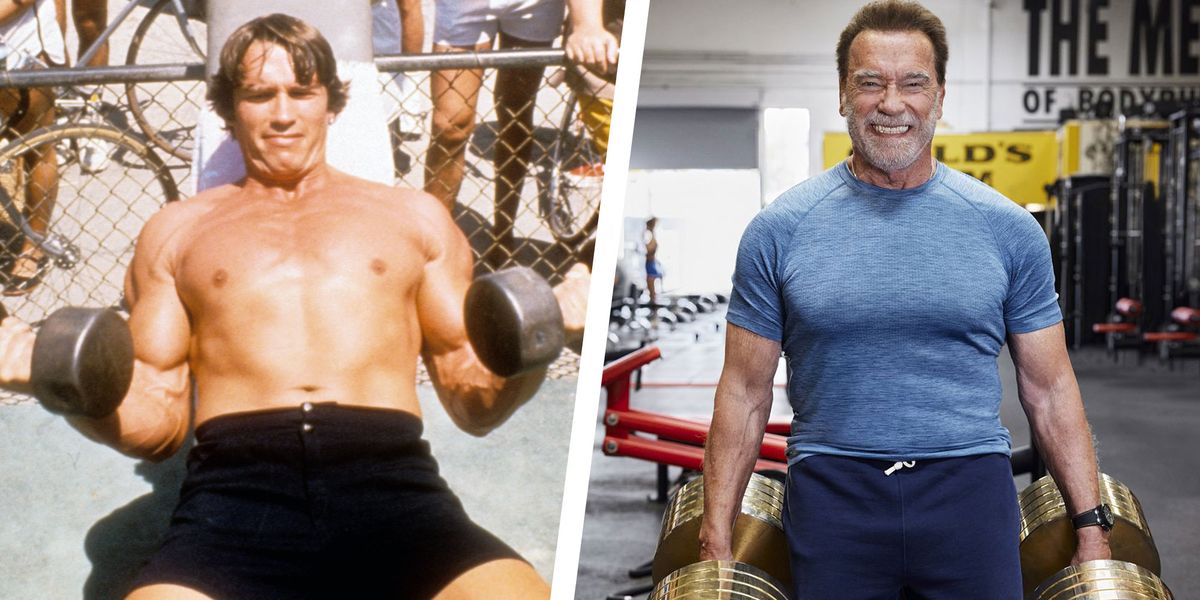
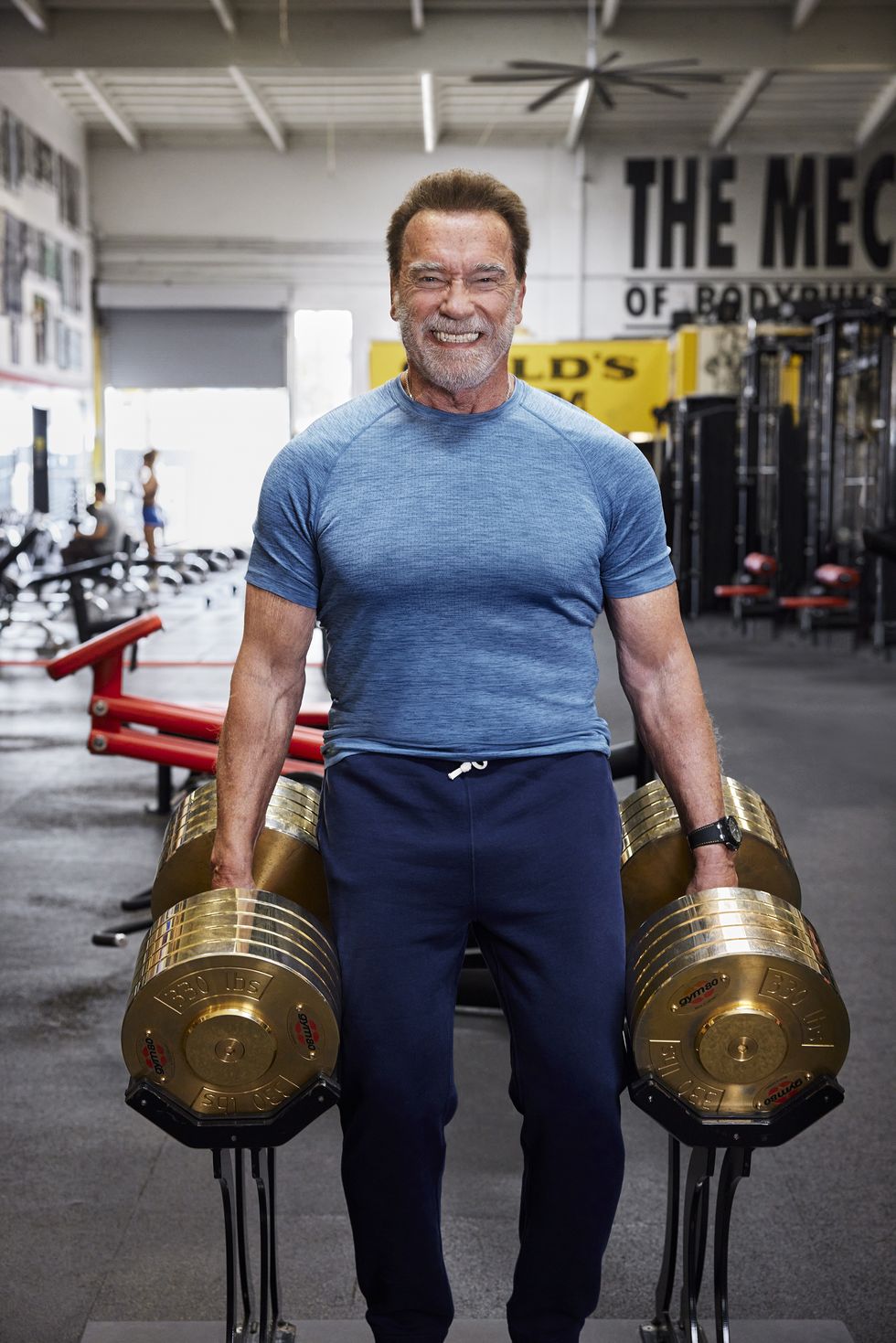
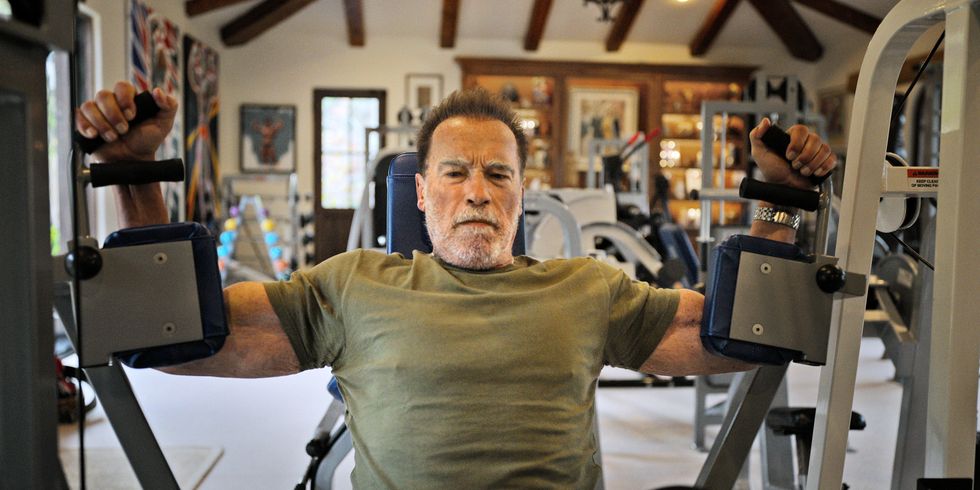
ARNOLD SCHWARZENEGGER is staring past the row of weight machines, and past the chain link fence that outlines Gold’s Gym’s in Venice Beach, California. He’s been taking me through his five-round morning shoulder circuit, and we’re supposed to be starting the fourth round, moving from exercise to exercise with no rest.

No matter. Two women beyond the fence just snapped iPhone pictures of him—and Arnold noticed. “Hello! How are you doing?” he says. They ask if they can take pictures. “Of course,” he says. “You’re in a public place. It’s a sidewalk. You can do whatever you want.”

Schwarzenegger pauses. “Did you take the picture? How did I look?” The reply: “Awesome.” “You just made my day,” he says. The women smile. Arnold wedges himself into a shoulder-press machine and pounds out 11 reps.

Immediately after that, he beckons actor friend Doug Farrell to flex for the cameras. When Farrell tightens his biceps, Arnold shakes his head: “No, flex again.” Farrell flexes his chest instead. Arnold nods.

And when a powerlifter from Ohio, Cory Gregory (better known as @corygfitness on Instagram, with 400k followers) stops him, he shakes hands. Minutes later, during his finishing arm circuit, Arnold stops doing dips so he can stand behind me during preacher curls, hands on my biceps. “Think, ‘biceps,’” he says loudly. Then he leans in closer. “Make this,” he whispers, “your best set ever.”

I crush 12 reps, and here Arnold say “perfect.” I freeze for a moment. Did he say that about me?

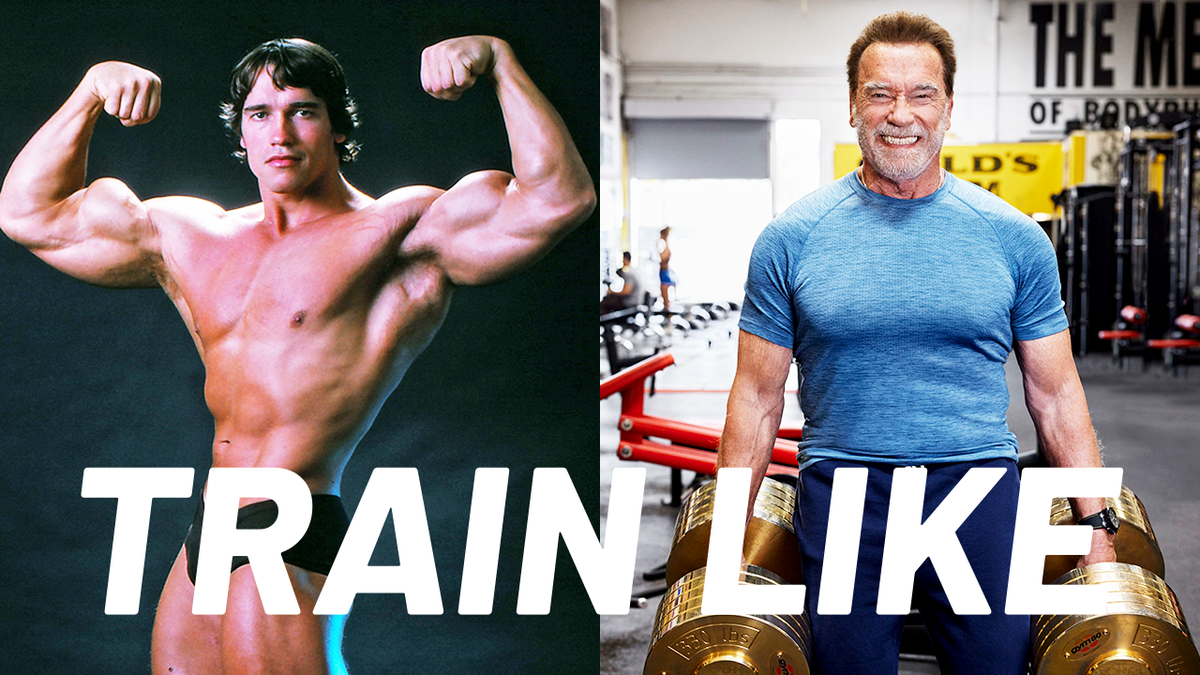
preview for Arnold Schwarzenegger FINALLY Reveals His Training Secrets | Train Like | Men's Health

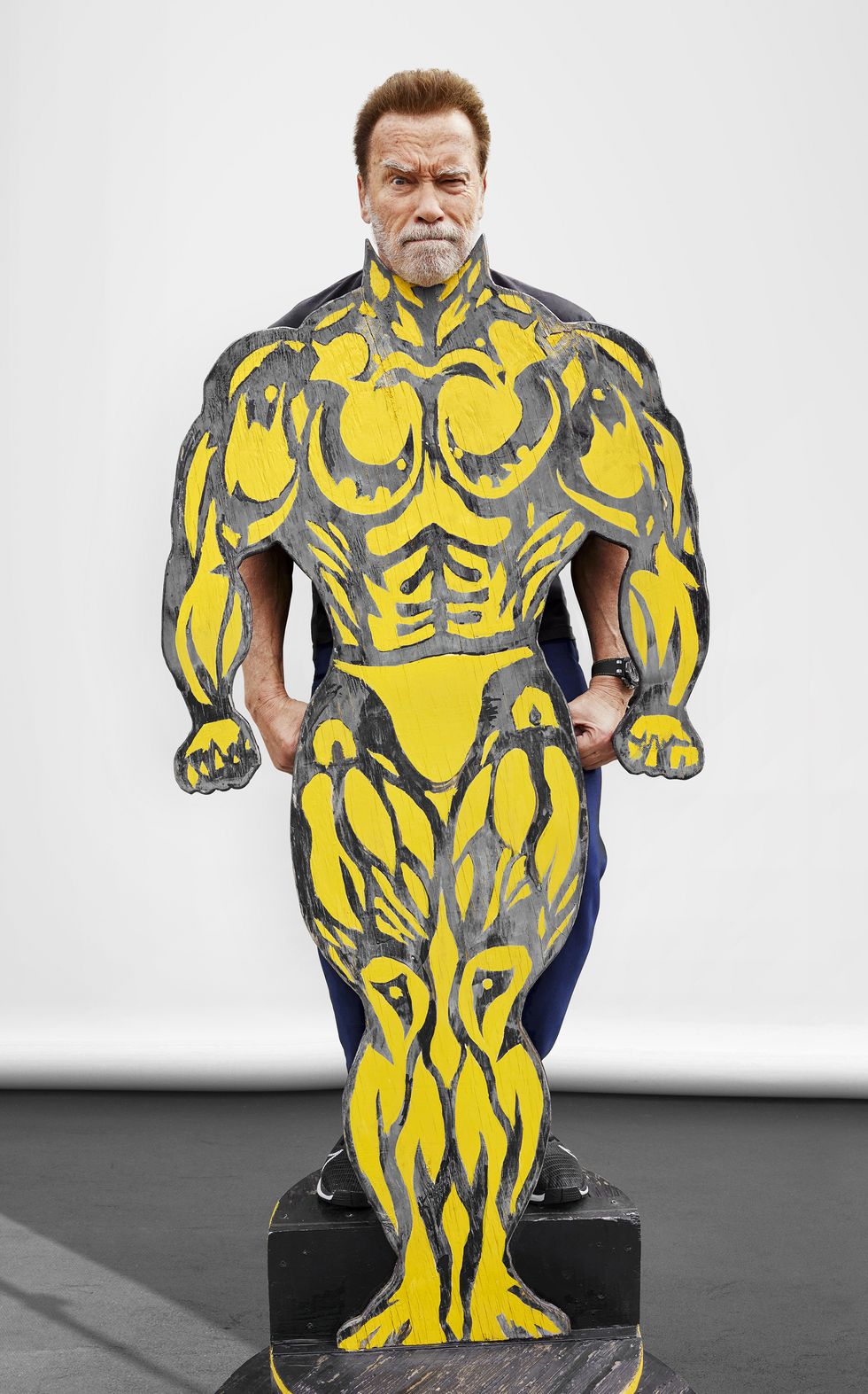
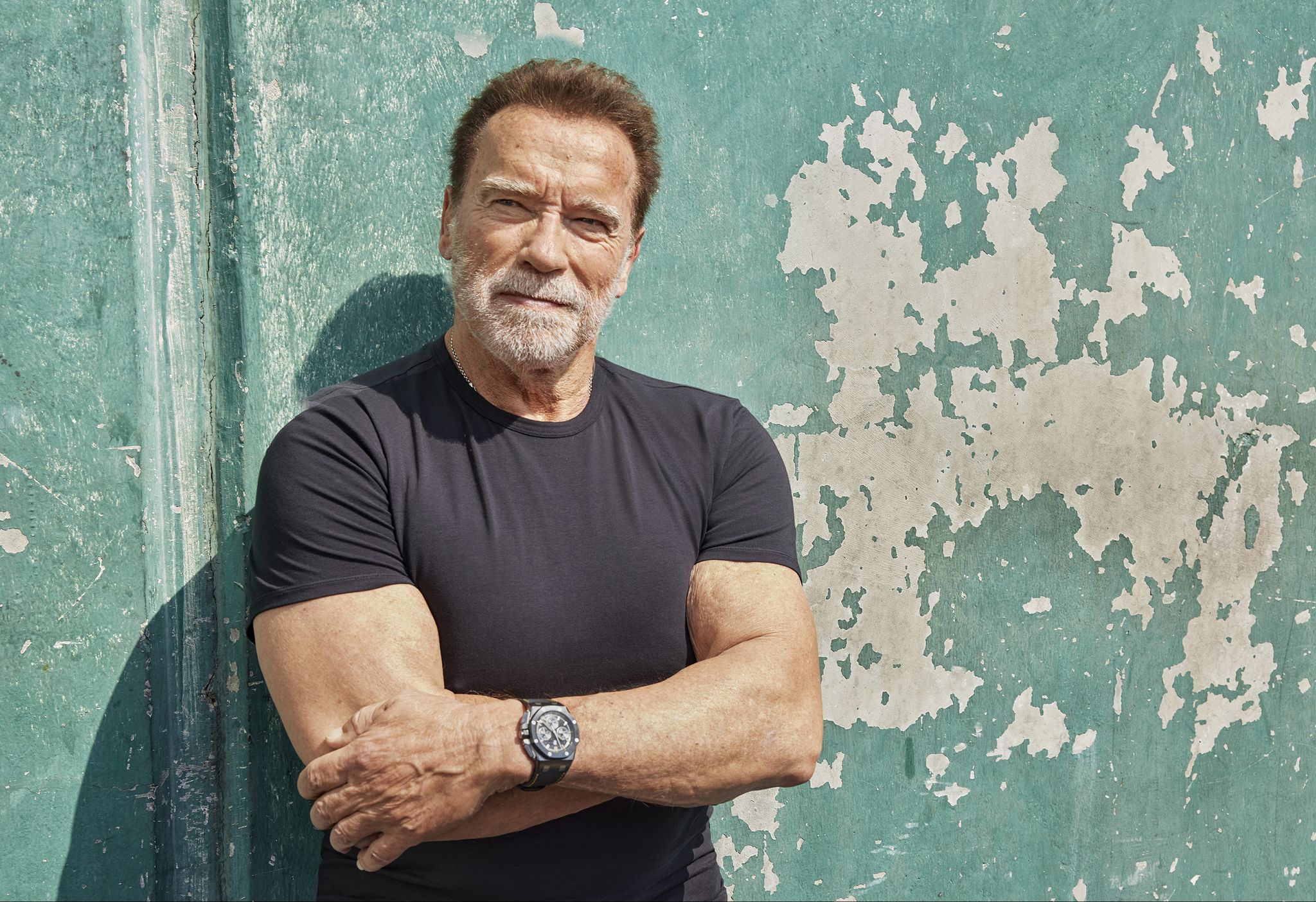
It’s a frenzied one-hour workout—and a glimpse into the latest iteration of a man who’s made a career of reinventing himself. At age 75 (he turns 76 on July 30), he’s no longer the effervescent ball of muscle who jumped from Olympia stage to Hollywood to politics. But Updated Arnold still demands attention, and if Gold’s doesn’t prove that, his 24 million Instagram followers and 5.9 million TikTok devotees do.

It’s all because of his ability to adapt. He’s four decades removed from his bodybuilding prime and 20 years removed from his last big-screen Adonis moment (when he materialized out of thin air in a desert to open Terminator 3). He mills around Gold’s like a rusted T-800, with lumbering steps and an ever-so-slightly hunched back. His ostrich-egg biceps have deflated a bit, and his elbows ache. He’s aware that the body that set the original action-hero standard is no more. When I ask him if he still hits classic bodybuilding poses, he smirks. “Yes, but only in the bathroom,” he says, “because sometimes it makes me cry.”

arnold schwarzenegger

But this latest evolution doesn’t rely on abs or chest or biceps. To achieve his goals, he’s adopted the role of influencer, using social media to foster a community and good vibes. Tune in to his Instagram right now and you’ll catch videos of Whiskey and Lulu, his pet pony and donkey, or you’ll see him filling the potholes that California forgot. All of that has set up bigger ventures: The Netflix release of FUBAR,an eight-episode spy dramedy, in May was the start, and that was followed by Arnold, a three-part personal docuseries (also on Netflix), in June. And in October, he’ll fix everyone’s problems through Be Useful: Seven Tools for Life.

“Be useful, meaning go and do something for other people” he says, explaining his foray into motivational self-help. “One of the rules of success is to give something back.”

breaker

WE’VE ALL BEEN influenced by Arnold, whether we realize it or not.

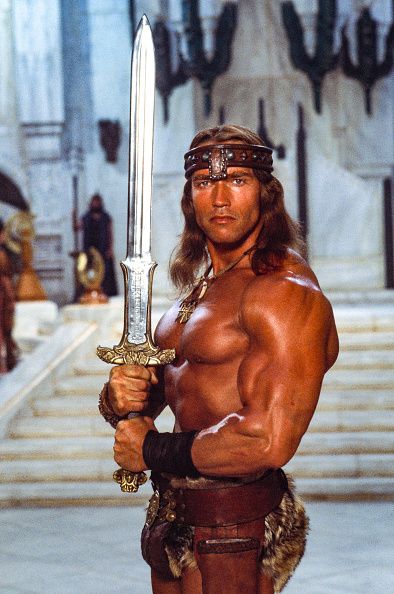
Decades before TikTok and YouTube, Schwarzenegger used old-school platforms like books, TV, and radio to make oversized muscle cool. Pre-Arnold superheroes were often average guys in spandex. (Think the ’50s series Adventures of Superman.) Then came Conan the Barbarian in 1982. “People were going crazy,” Schwarzenegger says, “that there was a guy that actually looked like Conan the way Frank Frazetta painted it.” Movies like Commando and TheTerminator sparked an ’80s filled with jacked heroes, and that era helped set the stage for Marvel’s takeover.

arnold schwarzenegger

Meanwhile, a generation of trainers (myself included) fell in love with bodybuilding. “He was influencing me and all the other young guys who wanted to work out,” says YouTuber Athlean-X, aka Jeff Cavaliere, C.S.C.S. (who has 13.3 million YouTube subscribers). “He was influencing what young men did.”

Everyone who’s circled a bench press has a favorite Arnold moment. Celeb trainer Don Saladino loves the Commando scene in which Schwarzenegger hoists a tree onto his shoulder. Cavaliere wanted to look like Arnold in Predator. If not for Terminator 2, I’m not penning this story—or telling my parents, “Hasta la vista, baby” daily for a month straight.

how do you make the people know about your product schwarzenegger

Years after T2,I’d uncover Arnold’s Encyclopedia of Modern Bodybuilding at a New Jersey library. Written by Schwarzenegger (and Bill Dobbins) and published in 1985, it covers a host of lifting fundamentals, such as power training and range of motion—and it’s a musclehead must-read. (Cavaliere has two copies.) It also has a host of Schwarzenegger photos, and as I thumbed through it, my life’s goal was forged: Grow. Big. Biceps. Schwarzenegger’s blend of jacked physique and action hero inspired guys to try to become their most well-muscled selves.

Not that Prime Arnold’s influence was perfect. By spotlighting bodybuilding culture and openly admitting that he took steroids, he drew attention to PEDs. And with each blockbuster film, he gave all guys a compelling reason to consider them: If you could build the ideal muscular aesthetic, you could follow in Arnold’s footsteps and reach megastardom and riches.

This wasn’t the fitness legacy he’d imagined. Arnold would prefer if his legacy were more defined by his morning workouts at Gold’s. The routines are like today’s: He does 25 to 30 total sets, often in Terminator sunglasses. The focus isn’t raw muscle; he spends time talking and posing for photos. He trains to “stay alive, to be able to do my movies.”

arnold schwarzenegger

He comes to Gold’s partly for the atmosphere, which reminds him of his youth in Thal, a village in Austria, 60 years ago. He remembers his first time doing pullups, as a 15-year-old with friends, repping out on tree branches. He did two reps, but the older weightlifters promised he’d be able to do 20 reps eventually—if he kept working. Days later, they asked him to join their weightlifting club, Athletik Union Graz. From then on, he always had a partner.

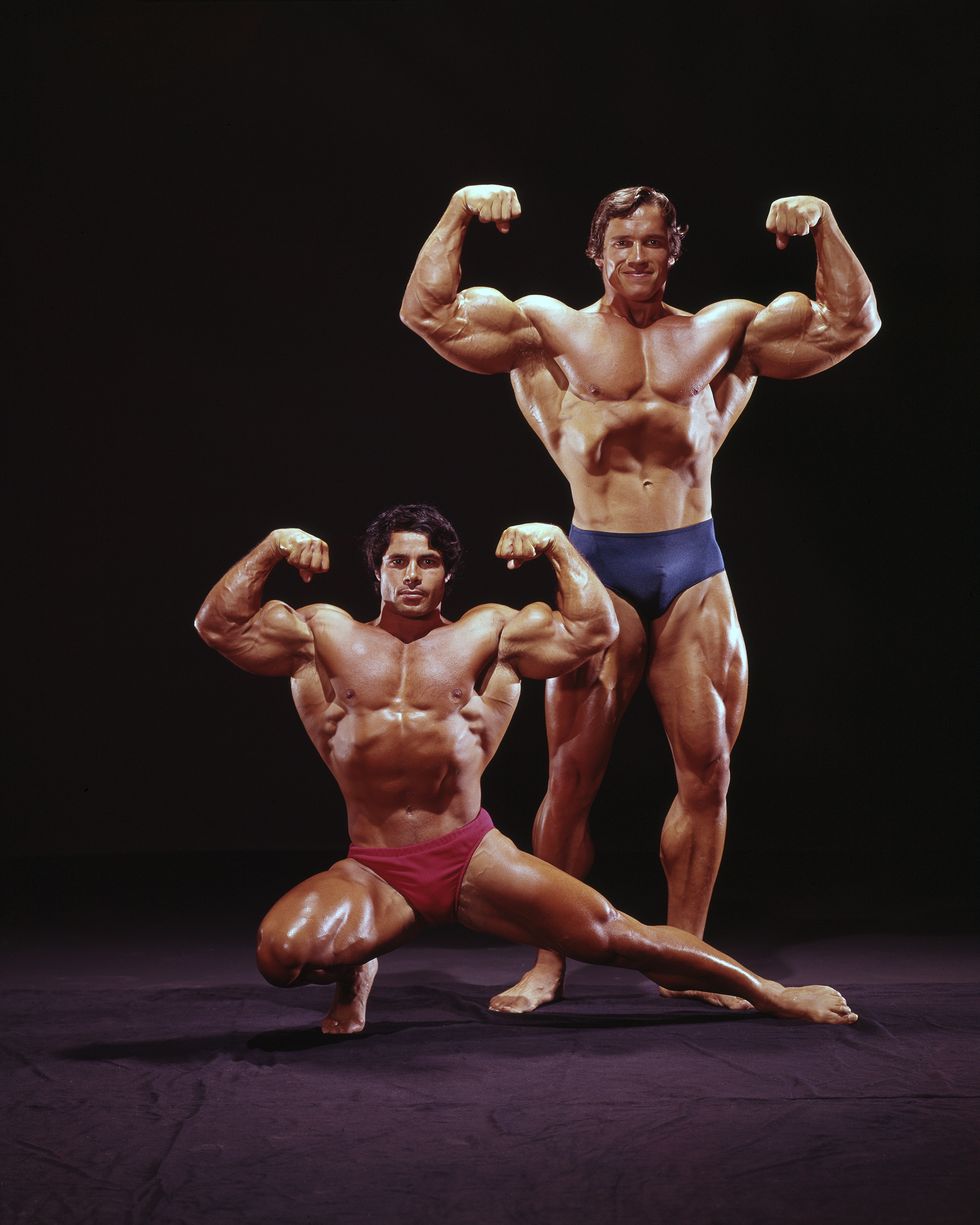
He brought that approach to the original Gold’s in Venice, a tiny box of a gym, in the 1970s. Back then, he trained with fellow Olympia competitors like Franco Columbu, Frank Zane, and Dave Draper. All would go on to have illustrious bodybuilding careers. “There’s a certain energy in the gym that we used to have,” he says. “And I wanted everyone to feel that joy.”

bodybuilding portrait of arnold schwarzenegger r and franco columbu posing during photo shoot los angeles, ca 8221974credit george long photo by george long sports illustratedgetty imagesset number x18874

Arnold and Franco Columbu, 1974.

George Long//Getty Images

But when Arnold realized that few bodybuilders were doing TV interviews and growing the sport, he began “influencing,” ’70s style. “I never looked at myself as the term influencer, because it’s a new word. But I always tried to use the media to spread my message.”

Watch Pumping Iron, the 1977 documentary on bodybuilding, and you’ll see the likes of Columbu and Zane lifting in silence. Lou Ferrigno, the doc’s other star alongside Schwarzenegger, trains at home, stone-faced. Schwarzenegger, meanwhile, jokes throughout, delivering one particularly legendary soliloquy that compares the “pump” you feel after an exercise to “cumming.”

“I was much more casual, much more fun,” he says, before making a statement that’s proved true in everything from bodybuilding to Hollywood to politics. “How do you make the people know about your product? Schwarzenegger.”

arnold schwarzenegger on the set of conan the destroyer, directed by richard fleischer, mexico city, mexico, 1983 photo by rolf konowsygmasygma via getty images

Arnold’s breakthrough role was in Conan the Barbarian (1982).

Rolf Konow//Getty Images

He channels that casual, fun attitude during our entire workout. I lag behind him into the second round of shoulders, used to training with people who want to focus. But as Arnold approaches the lateral-raise machine, he yells at me to hurry up, then tells me to put away my phone. (I was trying to sneak a few pics.) Only then does he begin his set—with a request. “Why is my training partner not counting out my reps,” he wonders aloud, “like Franco used to do?”

All at once, he keeps me loose and energized and imparts the gym wisdom I crave. I count his reps, then he counts mine—and sees that I’m cutting my range of motion just short, because he doesn’t hear the weights clanking as I lower on each rep. “Why rob it of one tenth of the movement?” he asks. “Which could be—we don’t know—but which could be one tenth of the growth?”

breaker

SCHWARZENEGGER HAS always been a master of identifying opportunities that others miss. And the way he sees it, that makes him responsible for more than simply fixing my lateral raise. “I didn’t plan to be the action star in movies,” he says. “I didn’t plan to be governor of the state of California. I didn’t plan on being the warrior for a clean environment—or any of those things. When I see there’s a vacuum . . . what the fuck’s the matter with these people? Then I jump in.”

That includes jumping in to solve problems he helped create, which is why Schwarzenegger has spent the past few years working hard to shift the fitness narrative away from mirror muscles and toward long-term wellness (although it’ll always be about the pump, too). This process actually began 34 years ago, with his Arnold Sports Festival. The yearly event is highlighted by a bodybuilding competition (because of course), but Arnold says its true purpose is to celebrate more than just muscle, hosting more than 50 different sports.

on the set of commando

Commando (1985).

Sunset Boulevard//Getty Images

It offers a chance for Schwarzenegger to undo one of fitness’s greatest myths: that the ultimate barometer of your fitness is your physique. The more Prime Arnold flicks you’ve watched, the more you might think biceps solve everything. That was never Arnold’s belief. “In the beginning,” he says, “my message was ‘Hey, everyone, wake up. We all have to do something.’ ” His festival includes disabled divisions that have invited a variety of athletes, such as the late Karen Skalvoll, who set a deadlift world record with an oxygen tank in 2020.

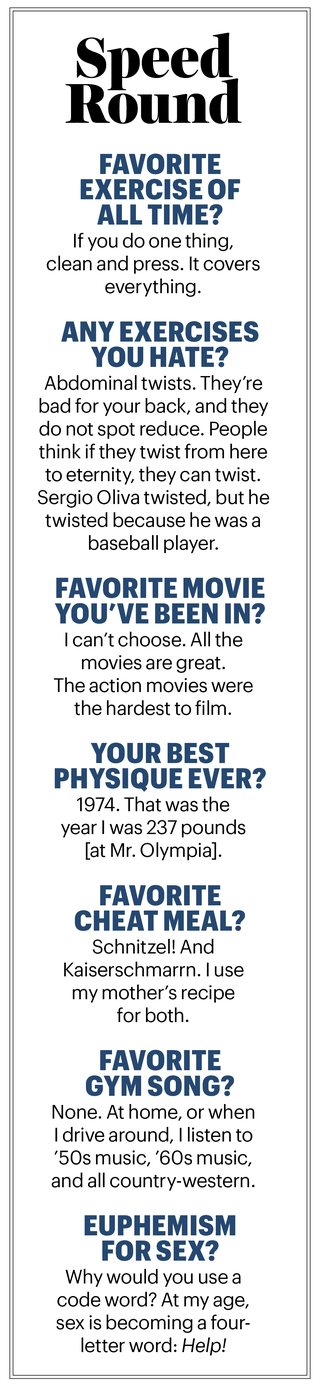
speed round

But the Arnold fest can’t fix the enduring problem of PED use. Among bodybuilders, it’s well-known that you stand little chance of competing if you’re not using. Influencers routinely detail their PED regimens on YouTube. And as testosterone-replacement therapy marches toward mainstream acceptance, more and more lifters are openly aligning with TRT clinics on Instagram and Facebook.

In clips from his bodybuilding days, Schwarzenegger doesn’t deny using steroids—and he is even more open when I ask. He explains what he took: testosterone and Dbol (a steroid still popular among bodybuilders). “One hundred milligrams a week,” he says of his testosterone usage, “and then three Dianabol a day, so that was 15 milligrams a day.”

He insists his usage was completely unlike today’s steroid abuse. Steroids weren’t illegal until Congress passed the Anabolic Steroids Control Act of 1990. Secondly, Schwarzenegger says, he only took them under a doctor’s supervision. That, he says, is different from how lifters acquire PEDs today. “Bodybuilding always, always was considered a safe sport. But now it’s not. Now people are dying—they’re dying because of overdoses of drugs and they don’t know what the fuck they’re doing. They’re listening to charlatans. If I want to get medical advice from a doctor, I go to UCLA or I go to the Cleveland Clinic.”

He’s trying to say the right things but knows he’s a flawed messenger. “Don’t go there,” he says. “Yes, we are at a time now where we always look for the easy way to make money, the fast way to get rich, the easy way to be an influencer. Anytime you abuse the body, you’re going to regret it. So I just want young people to know that I have seen people getting kidney transplants and suffering tremendously from it.”

He gets that you don’t want to listen, comparing himself to a rock climber who takes major risks, then tells others not to. “I recognize the fact that, who am I to say this? This is the guy who climbed without a rope.”

breaker

SCHWARZENEGGER’S LATEST evolution positions him to try to solve some of these fitness problems—and perhaps some other social media problems too. It starts with his transparency on PED use. Whatever Young Arnold did can’t be changed, but Today’s Arnold is all about that influencer buzzword: authenticity.And it continues with a heavy dose of Motivational Arnold across multiple platforms. There’s Be Useful, which he hopes will help with the “crisis of utility” that he believes is wrecking humanity. (He’s open to a Marvel movie, too. “If the role is right!” he says.)

fubar arnold schwarzenegger as luke brunner in episode 101 of fubar cr christos kalohoridisnetflix © 2023

FUBAR is an 8-episode dramedy on Netflix.

Netflix

The Arnold doc excites him more than any other project. He’s barely interested in talking about FUBAR, saying only that the script reminded him of True Lies. The three-part docuseries, which chronicles his three distinct careers (athlete, actor, and politician), marks the first time he’s been interviewed for a project on his life. “I said no to projects like this for years,” he says, “but I’ve seen how many people are inspired by my story. I hope it inspires millions of people to find their vision.”

He’s borrowing from the modern playbook of influencerism, too, advancing past TikTok and Instagram to deliver daily fitness wisdom to his audience with a free email newsletter. His Pump Daily, started in January, already has 431,000 subscribers. Email newsletters are an increasingly popular way for influencers to bypass social-media algorithms and connect with their most fervent followers.

The newsletter overflows with quick workouts and mindset advice from Arnold, as well as the occasional rant on society. He kicked off May by slamming influencer culture for being full of “bullshit artists and charlatans and outrage salespeople,” and various websites wrote about his diatribe. He didn’t mind. He recalls a weightlifter, Yury Vlasov, who inspired him in his youth. “You have to become the Yury Vlasov for the millions of people who come up to you,” he says, “because it has an effect on all of them. Then they eventually will be somebody, and then they will do the same for somebody else.”

arnold arnold schwarzenegger in arnold cr netflix © 2023

Arnold is a three-part documentary from Netflix.

Courtesy of Netflix

The goal, I’m starting to understand, has always been about more than biceps. It’s been about impact. And I can’t help wondering if maybe that’s why Arnold let me join him in his morning workout, pushing me hard on that final set of biceps curls and showing me his secret to developing strong rear delts. (His tip: Keep your chest off the pad during machine rear-delt flies.)

But Arnold had other reasons. “It’s teamwork,” he says. “You inspire me. I inspire you.”

Just like those old Gold’s Gym days, when Arnold’s influence reached only his workout buddies.

This story appears in the July/August 2023 issue of Men’s Health.

Headshot of Ebenezer Samuel,  C.S.C.S.

Ebenezer Samuel, C.S.C.S., is the fitness director of Men’s Health and a certified trainer with more than 10 years of training experience. He’s logged training time with NFL athletes and track athletes and his current training regimen includes weight training, HIIT conditioning, and yoga. Before joining Men’s Health in 2017, he served as a sports columnist and tech columnist for the New York Daily News.  

What Colin Kaepernick Has Taught the World About Strength

0
What Colin Kaepernick Has Taught the World About Strength

For our 35th anniversary issue, we’re spotlighting 35 men who embody strength in all of its forms. To see the full list, click here.

DEAR KAEP,

Thank you. Thank you. Thank you. Needed you aware of my immense gratitude for your sacrifices, for what you’ve done for our collective consciousness, for how you’ve transformed my thinking and seeing. For instance, the time I was riding a NJ Transit train with a horde of Jets fans (poor souls) returning from MetLife Stadium. Dozens and dozens decked in Jets jerseys and hats, no few recapping game highlights:

That dude’s an animal, some said, their breath a brewery.

Such and such is a beast, they said.

Did you see that hit? That guy’s a savage!

This was around the time the King of White Audacity threatened, “You shouldn’t be playing,” that “maybe you shouldn’t be in the country.” Which means you’d already gone from sitting to kneeling, were—unbeknownst to you, I suspect—becoming the target of perhaps the most infamous blackballing in sports history, were damn near 40-yard-dashing down a path that would transform you from a superstar Super Bowl–starting quarterback into a civil rights icon, which is also to say: a symbol.

The language used that day on the train was nothing I hadn’t heard before, but in that moment it was a caustic that scraped the inside of my ears and ramped my pulse. Because my impressionable son was with me. Because I’d been writing about race in America. Because your nascent crucible was on my mind, a struggle that forced me to consider the ways the jargon used to describe football players—animal, beast, savage, brute—echoed words that’d been used to cast our people as inhuman.

We are human and should be treated as such—that’s what I’ve gleaned as the crux of your message.

And here you are still delivering it. In speeches. On the screen. In books. At your camp. Here you are still pressing toward your dream of a return to the NFL.

To keep it 100, that last part hurts, bro. Every time I read a headline announcing another workout, watch a clip of you throwing a sublime spiral wearing not football pads but Nike gear, every time I encounter a TV or magazine interview with you proclaiming, “That’s not something I will ever let go of, regardless of the actions of 32 teams and their partners to deny me employment” or “The same way I was persistent in high school is the same way I’m gonna be persistent here,” it’s painful. Not because I disbelieve in your gifts or grit, your supreme confidence or unwavering wherewithal, your dogged belief in achieving the impossible. It pains me because I can’t help but mind proof of their shamelessness, their infidelity to fairness and equality, to honor and integrity, to the hallowed principles they swear are represented in their beloved flag and revised anthem.

No refuge could save the hireling and slave

From the terror of flight or the gloom of the grave . . .

The league colluding to refuse your labor is a wound because, in it, I see the legal woes foisted upon Ali for his conscientious objection; them people usurping the glory and spoils due Smith and Carlos; the machinations that robbed Mahmoud Abdul-Rauf of a prime career. In your long public (and who knows the measure of private) struggle, I’m reminded of the physical and psychic torture they doled to the enslaved they deemed literate or hopeful or obstinate or some other quality they perceived as a threat to their supremacy. Your plight reveals yet more proof of whiteness and its unyielding will to power, to endure by any means.

Still, I have no doubt you’ll press on however you can for however long you can. And though you owe me nothing—absolutely, positively, unequivocally nothing—I do wonder, dear brother, at this stage, does it all feel worth it?

Sincerely, Mitch

Joshua Kissi

This story originally appears in the October/November 2023 issue of Men’s Health.

Headshot of Mitchell S. Jackson

Mitchell S Jackson is a contributing writer for Esquire, the winner of a Pulitzer Prize and a National Magazine Award as well as the acclaimed author of the memoir Survival Math, and the award-winning novel The Residue Years.

When Is the Best Time to Take Vitamins? Experts Explain

0
When Is the Best Time to Take Vitamins? Experts Explain

VITAMINS ARE EXPENSIVE—there’s no denying that. If your doctor or dietician told you to start taking one, you’ll want to make sure you’re taking them effectively so you’re not wasting your money. That means taking them at the right time, in the right way.

So, when, and how, is the best way to take your vitamins? The answer is a bit more complicated than you’d think. In fact, the more ideal time to take your vitamins depends on what kind of vitamin they are. There are a few different kinds—water soluble, fat soluble, and multivitamins. The type determines how they’re absorbed, and gives us some hints as to best practices when it comes to taking it.

“The best time to take vitamins can vary depending on the type of vitamins you are taking and your individual preferences and needs,” says Erin Kenney, R.D..

That’s all to say, though, that the absolute best time to take them is when best fits your schedule. At the end of the day, it’s more important to ensure you’re actually taking them rather than when is most optimal. Consistency is key—if you find yourself skipping out on taking them entirely, you won’t reap any benefits at all.

Below, dietitians advise when’s best to take the different kinds of vitamins.

When’s the Best Time to Take Water Soluble Vitamins?

Water soluble vitamins, include vitamin C and B complex including thiamine, biotin, folate, and riboflavin. Water soluble vitamins are not easily stored in the body, and washed out if not absorbed, which makes them generally safe to take at any time of the day, says Kenney.

“Fluid intake is important for optimal absorption so wash down these supplements with a tall glass of water, and they can be taken with a meal or snack for best tolerance,” says Perri Halperin, M.S., R.D., clinical nutrition coordinator at Mount Sinai Health System.

When’s the Best Time to Take Fat Soluble Vitamins?

Fat soluble vitamins include vitamins A, D, E, and K. As the name suggests, the presence of fat dissolves these vitamins, Kenney says, so you’re going to want to take these with some kind of fat for proper absorption.

Halperin suggests taking these vitamins with a meal or snack that contains at least 5 grams of fat, “ideally unsaturated, for optimal health.” That could look like nuts or nut butter, olive oil, avocado, eggs, or fatty fish.

When’s the Best Time to Take Multivitamins?

Multivitamins contain both fat and water soluble vitamins. Because of that, multi-vitamins are usually best taken with a meal or a snack, accompanied by plenty of fluids. “Doing so has the added benefit of minimizing potential stomach upset,” Halperin says.

Digestion generally slows down at night, which might cause suboptimal nutrient absorption if you choose to take it before bedtime.

Should You Take Vitamins?

“Nutritious foods are the best way to get vitamins and minerals,” Halperin says. “Supplements can be used as a complement to help correct any potential deficiencies,” but they are not a replacement for food.

If your registered dietician or doctor has told you to take a supplement of some kind, taking it at an ideal time for that type of vitamin is going to optimize absorption. Talk to your healthcare provider about potential interactions between these vitamins and your medications—this could impact the time you take your vitamins, Kenney says. Some vitamins should be taken together, and some should be taken separately, so it’s important to formulate these things with your doctor, says Halperin.

Other things may affect the absorption of your vitamins, too. “Avoid taking supplements with minerals with coffee and tea. The compounds in these products can compete for absorption rendering them less effective and making for very expensive urine,” says Kenney. If you’re also taking a fiber supplement, it’s best to take that at a separate time, as it can affect absorption.

But, the absolute best time to take it is when you’re going to consistently remember to take it. If you don’t take your supplement, you’re not reaping any of the benefits at all.

preview for What to Know About Creatine
Headshot of Cori Ritchey

Cori Ritchey, NASM-CPT is an Associate Health & Fitness Editor at Men’s Health and a certified personal trainer and group fitness instructor. You can find more of her work in HealthCentral, Livestrong, Self, and others.

Headshot of Leslie Bonci, RD

Leslie is a sports dietitian based in Pittsburgh, PA. Her clients include the Kansas City Chiefs. She also works with the XFL and USFL. Her company Active Eating Advice—be fit, fed and fearless—provides performance nutrition consulting.

An inside look at body fat

0
An inside look at body fat

As men age, their metabolism naturally declines and they burn calories more slowly. Testosterone levels drop, and they may be less active, leading to potentially less muscle mass and making calorie burning even more challenging. In addition, many men consume more daily calories than they need. The typical outcome: too much body fat.

“When you take in extra calories and don’t burn them off, they eventually get stored as fat, and over time can accumulate,” says Dr. Caroline Apovian, co-director of the Center for Weight Management and Wellness at Harvard-affiliated Brigham and Women’s Hospital.

But the real problem is where this fat ends up. Many people think of “bad” fat as the kind they can pinch around their waist. But the fat that collects just under the skin — called subcutaneous fat — appears to cause few health issues.

A more dangerous type of fat, called visceral fat, is stored at waist level, but inside the abdominal cavity and around vital organs like the pancreas, liver, and intestines.

Visceral fat makes up only about 10% of a person’s total body fat. Still, research has found that high amounts can raise several heart disease risk factors, such as blood pressure, blood sugar, and total cholesterol levels.

How to measure

How can you measure visceral fat? The most accurate way is with an MRI, but that can be expensive (and the test is not covered by health insurance if ordered solely to assess visceral fat). Body mass index (BMI) provides a reasonable estimate using a person’s height and weight. (Find your BMI at /bmi.) But BMI does not account for ethnic differences, nor does it consider extra weight from muscle and bone mass.

One of the best (and easiest) ways to gauge visceral fat is your waistline, according to Dr. Apovian. “In general, a man whose waist measures 40 inches or more has excess visceral fat.” (See “Waist management.”)

But what if you have only put on an extra three to five pounds that moves the belt buckle over one hole? Is that a problem? Not necessarily—but be careful, warns Dr. Apovian. “It’s easy for five pounds to quickly turn into 10 pounds, and the more extra weight you carry, the greater the risk for high amounts of visceral fat.”

Waist management

A tape measure is a simple way to keep tabs on visceral fat. Place the bottom of the tape at the top of your right hipbone, then pull the tape around at navel level (not the narrowest part of your torso). Do not suck in your gut or pull the tape tight enough to compress the area. A waist circumference of 40 inches or more is considered a sign of excess visceral fat for men. Also monitor whether your pants get snug, which also can be a sign you have gained visceral fat.

Going deep

The best way to fight the fat you cannot see is the same as for fat you can see—aerobic exercise, strength training, and a healthy diet. But keep in mind that visceral fat can be slow to come off. “You first gain visceral fat, and then you gain subcutaneous fat,” says Dr. Apovian. “But when you lose weight, only about one-third is visceral fat.”

Dr. Apovian recommends a combination of 30 minutes to an hour of moderate-intense aerobic exercise, two or three days a week, plus two sessions a week of weight or resistance training to add muscle mass. “The combination helps to burn calories and tap into stored visceral fat,” she says.

The kind of aerobic exercise doesn’t matter as long as the intensity raises your heart rate enough that it is difficult to have a conversation. Some of your aerobic workouts should include high-intensity interval training, or HIIT, Dr. Apovian adds.

With HIIT, you run or walk at a higher intensity for a brief time, followed by a period at a slower pace to catch your breath. You repeat the cycle for the entire workout. You can enlist a personal trainer to help design a HIIT program and teach you how to perform the exercises correctly and safely.

Besides following a healthy, plant-based diet, make sure you eat enough daily protein to help build muscle mass. The recommended daily intake is 0.8 grams per kilogram of body weight. (You can convert your body weight from pounds to kilograms by dividing by 2.2.

So, for instance, 160 pounds is 72 kg; multiplying this by 0.8 equals about 58 grams of protein a day.) Fish, poultry, beans, and yogurt are good protein sources. You can also mix protein powder into smoothies, oatmeal, or a glass of water or milk.


Image: © Elena Pimukova/Getty Images

What Is It, and Does It Help Your Mental Health?

0
What Is It, and Does It Help Your Mental Health?

THERE’S BEEN A LOT of talk about microdosing psychedelics lately as a way to improve mental health.

While research is ongoing, some early studies have shown that the substances could be as effective as some traditional treatments for anxiety and depression. But experts say more research is needed on the subject to truly establish its mental health benefits.

Psychedelics are also illegal in much of the U.S., but some states have started to decriminalize their use.


preview for Men's Health US Section - All Sections & Videos

Still, people are interested in trying them. More than half of Americans say they’re open to trying psychedelic medicine, according to a survey by Mindbloom, a ketamine treatment provider.

“This is just the beginnings of a very exciting field of work,” says Vivian Tsang, M.D., a psychiatrist, adjunct professor at Vancouver Island University, and a research lead at Roots to Thrive, a nonprofit healthcare practice in Canada that’s devoted to ketamine- and psilocybin-assisted therapy. “There are great teams of researchers doing a lot of work on this.”

Microdosing refers to taking a smaller amount of a typical dose of a psychedelic, such as psilocybin (or magic mushrooms), LSD, ketamine, or MDMA, Dr. Tsang explains. However, mushrooms tend to be the most common psychedelic used in microdosing, since much of the research has been done on them.

Microdosing mushrooms is generally safe for most people and doesn’t have addictive qualities, she says. But it’s best to do it under the guidance of an experienced health professional.

Here’s an overview of what’s considered a microdose, the potential mental health benefits of microdosing, and other things you should know about it.

What Is Microdosing?

There isn’t really a standard microdose measurement, but Dr. Tsang says it’s usually about one-tenth of what would be considered a typical dose (that might be used for recreational purposes).

“This can allow you to take advantage of the potential benefits of psychedelics without experiencing their full psychedelic effects, like hallucinations,” says Stacia Woodcock, PharmD, a pharmacy editor at GoodRx.

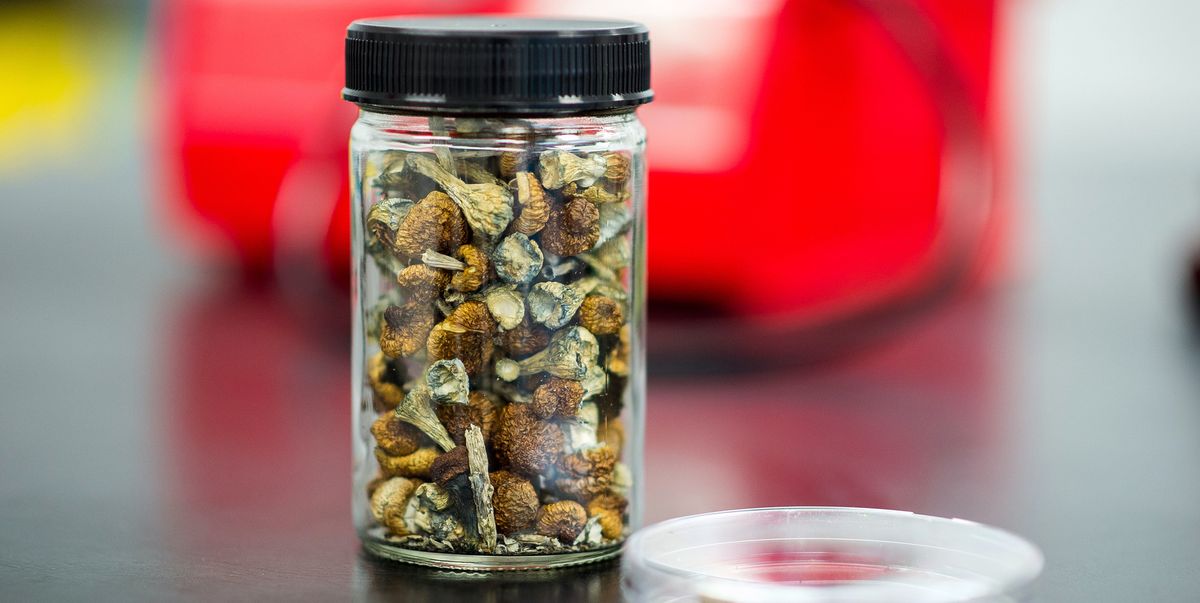
The mushrooms used in microdosing contain psilocybin, a natural chemical that can have mind-altering or hallucinogenic effects. Woodcock says psilocybin has been used for recreational or religious purposes for centuries.

Unless you’re working with a healthcare professional to take psychedelics, it can be tough to know how much you’re actually taking, she adds. Since these substances are illegal in the U.S., they’re not regulated and may contain more than a microdose—and, that could bring some side effects.

How Microdosing Works

Psilocybin mushrooms can be consumed dried, in capsule form, or infused in teas or other products, Dr. Tsang says.

Because the dose is so small, you usually won’t experience any hallucinations or sensory changes, she explains. Those effects often come with macrodosing.

However, many people who microdose report feeling a heightened sense of awareness, focus, energy, or creativity, Dr. Tsang adds.

“At the microdosing level, you should be able to move about your day in a safe way and be able to go to work or school,” she says.

Under medical supervision, you might be advised to microdose every three days or a few times a week, depending on how you respond, Woodcock says.

The Benefits of Microdosing

Research on the mental health benefits of microdosing mushrooms is still in the early stages, and some of the findings have been mixed.

A 2021 study published in the New England Journal of Medicine found that psilocybin therapy was just as effective as traditional antidepressant treatments for moderate to severe depression. But, some participants reported higher anxiety and lower mood after microdosing.

Other research suggests psilocybin may also help treat substance use disorders, depression, anxiety, PTSD, and OCD.

More research is needed to provide more evidence on the potential benefits of microdosing mushrooms—especially randomized controlled trials, which are the “gold standard in research,” Dr. Tsang says.

Some researchers suggest that psychedelics like mushrooms work best when they’re part of a comprehensive treatment plan that includes therapy and guidance from a trained mental health professional, Woodcock says.

Many of the benefits of microdosing psilocybin have been from small anecdotal studies, but suggest it can improve mood, attention, and creativity. It may also improve cognitive function or help reduce excessive drinking.

Is Microdosing Legal?

Psychedelics are illegal in the United States, Woodcock says. But, there’s a growing movement to legalize or decriminalize psychedelics.

In 2022, Colorado voters approved a measure to legalize psilocybin, and the state has already taken steps to decriminalize it. Oregon has legalized the use of psilocybin via licensed service centers.

It might be possible to purchase psilocybin online or elsewhere, but these products may not be safe, Woodcock says. It’s tough to know how much of the psychedelic or other ingredients the products contain.

What Are the Risks?

True microdosing is generally safe for most healthy people, Dr. Tsang says.

But sometimes you might unknowingly be taking more than what’s considered a microdose, especially if you’re using psychedelics without supervision or guidance from a medical expert, she adds.

If you take a full dose of psilocybin, you could experience hallucinations, nausea, vomiting, dizziness, or high blood pressure, Dr. Tsang says.

Headshot of Erica Sweeney

Erica Sweeney is a writer who mostly covers health, wellness and careers. She has written for The New York Times, HuffPost, Teen Vogue, Parade, Money, Business Insider and many more.

Diplo on the Malibu Triathlon, Social Media, and Being a Dad of 3

0
Diplo on the Malibu Triathlon, Social Media, and Being a Dad of 3

DIPLO WILL TRY anything once. Like, say, running a marathon on LSD. The DJ, born Thomas Wesley Pentz, made headlines when he admitted to ingesting the psychedelic for fun at the starting line of the 2023 Los Angeles Marathon earlier this year.

He forgoed a training schedule for his first go at a 26.2—only reaching 15 miles in practice—but he had Olympian Alexi Pappas by his side the day of the race as a pacesetter to compensate for his lack of experience. He crossed the finish line with an impressive time of under four hours. However, pounding the Los Angeles pavement still took a toll on the 44-year-old, leaving him to waddle “like a penguin” for four days.

“Human beings, that energy—you feel love when you’re at something like the marathon,” he tells Men’s Health. “Maybe I was high on LSD [during that first marathon], but [I] felt love.”

Most know Diplo as a genre-blending, music-producing powerhouse, and not as someone with a strong passion for the fitness world. Sure, he’s guilty of posting an occasional thirst trap for his 6.2M Instagram followers, but that’s because he’s proud of the body he has with no plans to let it go to waste.

“I want to challenge myself,” he says. “I want to use my body. The older I get, the more goal-setting makes me feel good. The marathon was a goal. I did that. You just try to find things you want to do, and then you do it, and you never have to do it again.”

2023 los angeles marathon

Meg Oliphant//Getty Images

But he made an exception this year. It’s Diplo’s second time participating in the Malibu Triathlon: a classic test of endurance where competitors cycle, run, and swim in timed trials along the California coast. He blamed his 2022 triathlon flop, and subsequent disqualification, on an uncharged bike—as well as huge waves and “fucking monsters” out in front during the water portion—but his attempt this month told a different story. He crushed all three sections in one hour and 25 minutes without any excuses, any legitimate training, or any drugs.

When he’s not seeking medals, Diplo still likes to remain active through surfing, sparring with a trainer, or—most surprisingly—downward dogging in a yoga class. And while a hectic travel schedule often means he’s forced to break a sweat alone, he’d actually prefer to exercise with a crowd size similar to that of his sold-out performances. It leaves him feeling “so much more powerful” compared to working out solo.

After finishing a workout in the Men’s Health gym, Diplo sat down with us to discuss authenticity in the music business and in life, talking shit on the internet, and being the best role model possible for his kids.


Men’s Health: Who guided you on the path to success when it comes to music and producing?

Diplo: I don’t think anybody did actually. If anything, I applied a lot of my father’s knowledge to discipline into what I was doing, which is music. He really instilled in me that if you want to be successful, just make sure you do it. Get things done. I managed myself in the beginning [of my career]. I booked my own shows. I put my own parties on together. I bought the liquor. I knew how it all worked.

When you’re behind the booth, what percentage of being a DJ is feeling it in your soul versus knowing the right buttons to press?

To actually apply it, to release it properly, and to become a brand, it’s very difficult to make that step. The creative side was always the beauty of it, but it’s tainted when you have to do the business side of it. It’s hard to find that balance, and I have to step back sometimes because if I get too into the business, I don’t like music anymore. You have to find that balance and that’s the hardest part.

2023 governors ball music festival

Taylor Hill//Getty Images

Your music reaches all different parts of the globe, but you’ve also gotten the world’s attention by saying pretty much whatever you want. Do you have no fear of backlash?

I think I’ve always had a careless abandon of social media. I was one of the first DJs on Twitter, so I was just reckless. I was making fun of everybody there. I remember I had a fight with Flo Rida, I had a fight with Sean Paul on there. Taylor Swift, I had beef with her once. That was probably one of the biggest career mistakes I ever [made]. It took me a year to get [past] that. But I just didn’t think that it was real. It was like when the medium came out it was just people, and your thoughts are like mine.

Now it’s mainly Instagram for you—and the occasional podcast.

It’s like my journal. I like to write stories and give captions, talk about real, meaningful things, not just like what’s my cool outfit or this is how many people I DJ’ed for today. That’s tired. I do that sometimes to promote my music, but I like it because it’s a place to live. And yeah, podcasts, I just talk shit. Sometimes I just don’t care. I’m a real person. If you just add up my soundbites, you might find the sweet ones or I might be a sarcastic asshole or I might be gay. You say something that’s careless or funny or weird, and you got to work with that. That’s the format we live in.

You mentioned turning parts of social media into a journal. Do you show the health and wellness aspects of your life intentionally to contrast the galavanting around?

I do show like, ‘Hey, I woke up early today even though I DJ’ed till 5 o’clock in the morning.’ Or like, ‘Hey, I have a layover. I’m working out.’ I just show people it’s possible to do it. But it can be lonely. When we’re on the road, two weeks you’re on the road 10 of the 14 days, you’re just married to your tour manager and your assistants. So there are upsides and downsides. I get to see the world, but you have to find some pace that you’re going to have time for yourself as well.

As a proud father to three young boys, how often are you thinking about the moves you make and how your choices will influence them as they get older?

My kids are really offline. They’re confused sometimes because they’ll go to a big rave or they’ll go to my race or they’ll go down to see my family in Florida and it’s like they only get little snippets of my life. I think one day they’re going to get a flood of like, ‘Wow, your dad’s actually a psychopath for wanting to do this shit.’ But for now, I just want them to think that I’m their dad and I want them to feel like they’re great kids and I love them, so I’m not trying to show off.

A very fair approach to have at this stage of their lives.

I also don’t want my kids to have some complex where they feel like they have to compete with me or something. I can think of a lot of famous or successful people’s kids who have this. They have a complex that’s difficult for them to beat, and you can’t really beat it. You just got to tell your kids that whatever they do is going to be awesome and make them feel that way.

What words of wisdom do you have for someone looking to lead this no-holds, no-boundaries lifestyle like yours?

It’s easy to say, ‘Make sure you’re comfortable with who you are,’ but that’s a really hard thing to do. The main thing is to have people around you that are really fucking honest with you, real with you, and can support you. And if they know you, you don’t really need anybody else. You can be on the internet and people talk to you all day long, but if your real friends know who you are and they give you the right information, the right, ‘You can do better at this,’ or they love you and show you love, you just need that. You need the right community.

And some people don’t find it. It’s really easy to get lost and not find real people to be your supporters. It’s important to find people that love you. Whatever path you take, they’re going to be like, ‘That’s cool.’ If you can find those people that really care about you like that, then you can be free as fuck.

This interview has been condensed for length and clarity.

Headshot of Sean Abrams

Sean Abrams is the Senior Editor, Growth and Engagement at Men’s Health. He’s a former hip hop dancer who likes long walks on the beach and large glasses of tequila. You can find his previous work at Maxim, Elite Daily, and AskMen. 

What To Remember Before ‘Loki’ Season 2

0
What To Remember Before ‘Loki’ Season 2

FOR THE VERY first time, a Marvel Cinematic Universe show now has a second season. Not speculation, not rumors, not theories—a real second season. After more than two years away (and with 17 MCU movies/shows coming in that time since), Loki is finally back for more time-traveling, universe-hopping fun.

But with all that time—and all those Marvel projects—comes a lot to store in our noggins. I can barely remember what happened in the credits scene I watched a couple months ago letalone the character happenings of a show that aired two years ago. I remember that Loki was great fun and quite exciting, and you probably remember the same. But do you remember what happened? Do you remember who the characters are?

You very well might. But on the off chance you don’t we’re here to just give you the tiniest of recaps to remember where things stand and where things are headed. What we aren’t including in this story is information about new characters to the show, such as the TVA agent played by reigning Best Supporting Actor Oscar winner Ke Huy Quan (for Everything Everywhere All At Once), for the simple purpose of… we don’t know! Watch the show, and you’ll surely find out all about him. We also aren’t including the wonderful cartoon Miss Minutes on this list, because, well, she’s more of an AI simulation of a character than an actual being with agency (though she’s still fantastic and Tara Strong does fantastic voice work as always).

So, without further ado, here’s a quick refresher on the main characters of Loki—and what you may need to recall.

Loki

loki episode 4 credits scene

Marvel Studios

The first important thing to remember about Loki in Lokithis Loki, if you will—is that he didn’t actually live any of the events that took place after The Avengers (2012). He got to the TVA because he stole the Tesseract and teleported away when Tony Stark and the Avengers attempted their great time heist during the events of Avengers: Endgame.

Still, while Loki didn’t live the events of, say, Thor: The Dark World or Thor: Ragnarok, he still saw how things played out (in that timeline) thanks to a film of his life that he was shown early on at the TVA by Mobius. M. Mobius.

Over the course of Loki, he comes a long way, eventually turning into far more of an anti-hero or even just straight-up hero (while also forming quite the bromance with Mobius in the meantime). He also finds a kinship (that, at times, is romantic in nature) with Sylvie, who is, in fact, a variant of himself. It makes sense that Loki would be in love with himself, does it not?

By the end of the series, Loki and Sylvie, seeking the truth about the TVA, are pruned, where they eventually are sent to a far off land where they meet He Who Remains, who turns out to be the person really in charge of the TVA (they had previously had some android “Timekeepers” masquerading as the powers that be). When Sylvie kills He Who Remains, a multiversal war is triggered, and Loki is transported back to the TVA, where he tells a worried Mobius that someone very, very bad (Kang) is coming. Mobius, however, has no idea who Loki is or what he’s talking about—he’s landed in another timeline.

Mobius

loki episode 4 vampires

Marvel Studios

Mobius, meanwhile, is a long-devoted TVA agent who used to be loyal to a T, but since meeting Loki, doesn’t mind bending the rules a little bit. He loves Jet Skis, and by the end of Season 1, has come around to a real friendship with Loki (and was using him at a certain point as something of a crime consultant, considering he was hunting down a Loki variant that turned out to be Sylvie). But perhaps the most important realization about Mobius (and about every TVA agent) is that they are actually variants of real people on earth—more on that in just a bit.

The fact that Loki landed in a different timeline, though, means that he’ll have to re-teach Mobius about just how close they got during the events of Season 1. Sad!

Sylvie

loki sylvie jonathan majors

Marvel Studios

Sylvie, a female variant of Loki who uses a different name, never had much of a chance. She was taken by the TVA as a child, and since escaped; she’s been hiding out in different timelines near disasters wreaking havoc ever since. Given that the TVA took her life away, you can see why she made the decision to stab He Who Remains, killing him and creating a massive, world-changing multiverse.

After killing He Who Remains, Sylvie pushed Loki through a portal and we don’t know where she ended up after that (though she’s seen working in McDonald’s in the Season 2 trailers for the show).

Ravonna Renslayer

ravonna renslayer

Marvel Studios

A judge at the TVA, Ravonna was a secondary antagonist in the first season due to her rigid loyalty to the TVA (despite the fact that she didn’t really have any idea what was going on). She has a fun back-and-forth with Mobius (though rarely are they actually on the same page), and B-15 proved that she has at least one variant on earth who is a school vice-principal. Once Ravonna figured out the truth about the TVA (that the Timekeepers were androids, etc.) she left to go on her own mission to find free will, which we can only assume will be continued in Season 2. Fun and perhaps important note: in the Marvel Comics, Ravonna is Kang the Conqueror’s on-again, off-again love interest.

Hunter B-15

a person wearing a helmet and holding a gun

Marvel Studios

Hunter B-15 has perhaps the most dramatic character arc of any in Loki Season 1, as she begins the series simply as a loyal TVA soldier, and ends it fully embracing an all-out TVA revolution. She knows that there’s a variant of her on earth who loves happy hour cocktails, and so she joins Loki, Mobius, and Sylvie’s side of wanting to kind of re-start this whole thing.

The only problem is that much like with Mobius, Loki ended up in a different timeline. So when he’s explaining to Mobius and B-15 what happened at the end of the Season 1 finale… they have no idea what he’s talking about, and a giant Kang the Conqueror statue has been erected behind them.

He Who Remains/Victor Timely/Kang the Conqueror

a man wearing glasses

Marvel Studios

And then we come to the major villain. For this one, we’re going to have to go away from Loki Season 1 just a bit and also take from Ant-Man and the Wasp: Quantumania. The final episode of Loki Season 1 was all about the real creator of the TVA: He Who Remains. He Who Remains was a variant of a future warrior named Kang the Conqueror, who had countless variants, all of whom had extreme intelligence and learned how to travel through time and universes. He Who Remains built the TVA as a way to keep them all in check, revealing to Loki and Sylvie that if he died, a multiversal war that would be unable to undo would follow. He also offered them the opportunity to take his place as the leaders of the TVA, maintaining order. They did not take this offer; Sylvie killed him, and chaos ensued.

Quantumania introduced us to the primary Kang the Conqueror, a murderous war lord who can conceivably control time and has endless power. While Scott Lang and company managed to defeat Kang in the Quantum realm (at least for the time being), the film’s post credits scene showed that another Kang variant—one calling himself Victor Timely—was putting on some kind of science presentation, and Loki and Mobius were watching from the crowd. Mobius asked if this was really the guy he was so scared of, and Loki responded resoundingly in the positive.

And so now you’re caught up with Loki, ready to dive right into Season 2. Happy streaming!

Headshot of Evan Romano

Evan is the culture editor for Men’s Health, with bylines in The New York Times, MTV News, Brooklyn Magazine, and VICE. He loves weird movies, watches too much TV, and listens to music more often than he doesn’t.